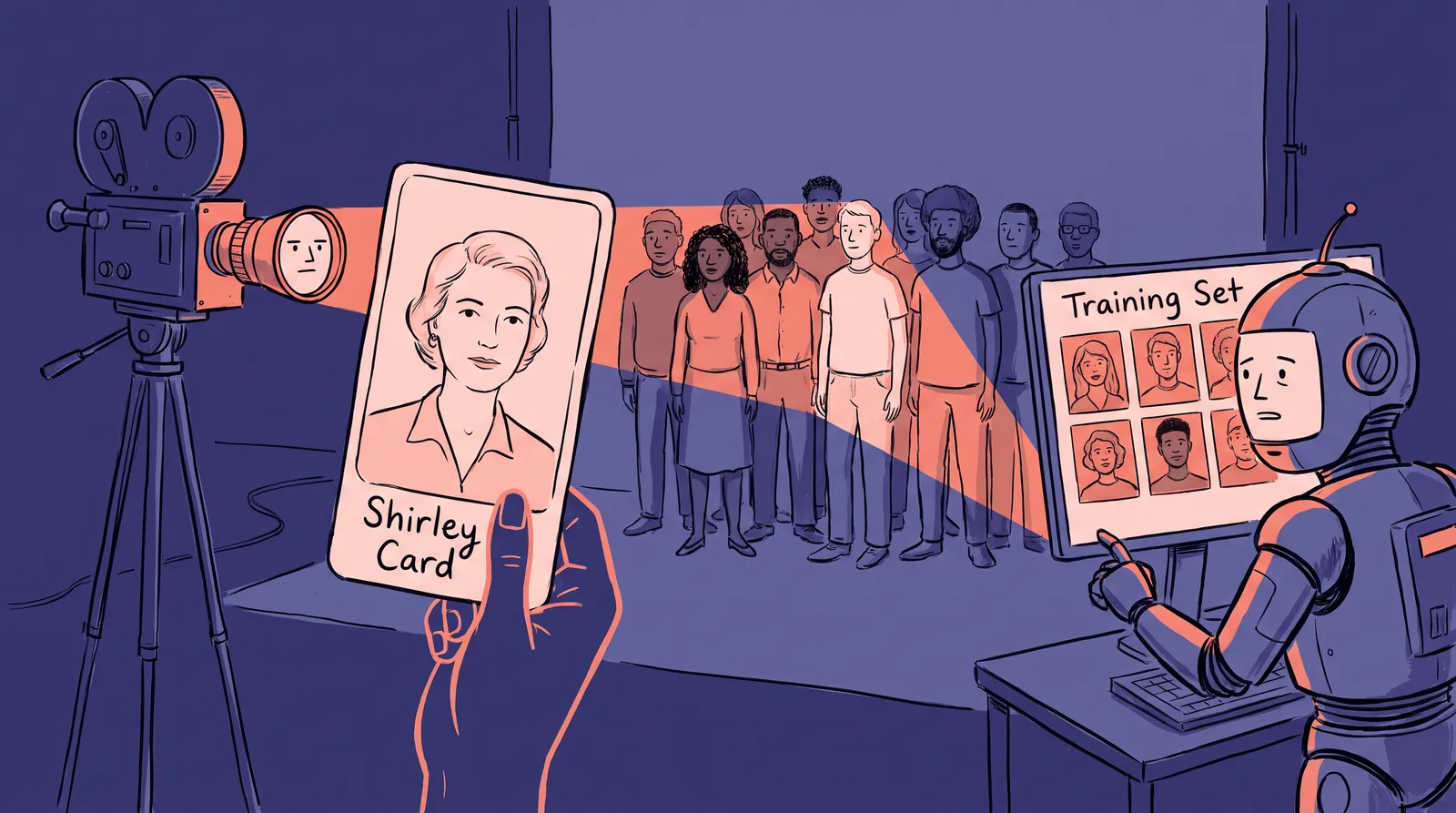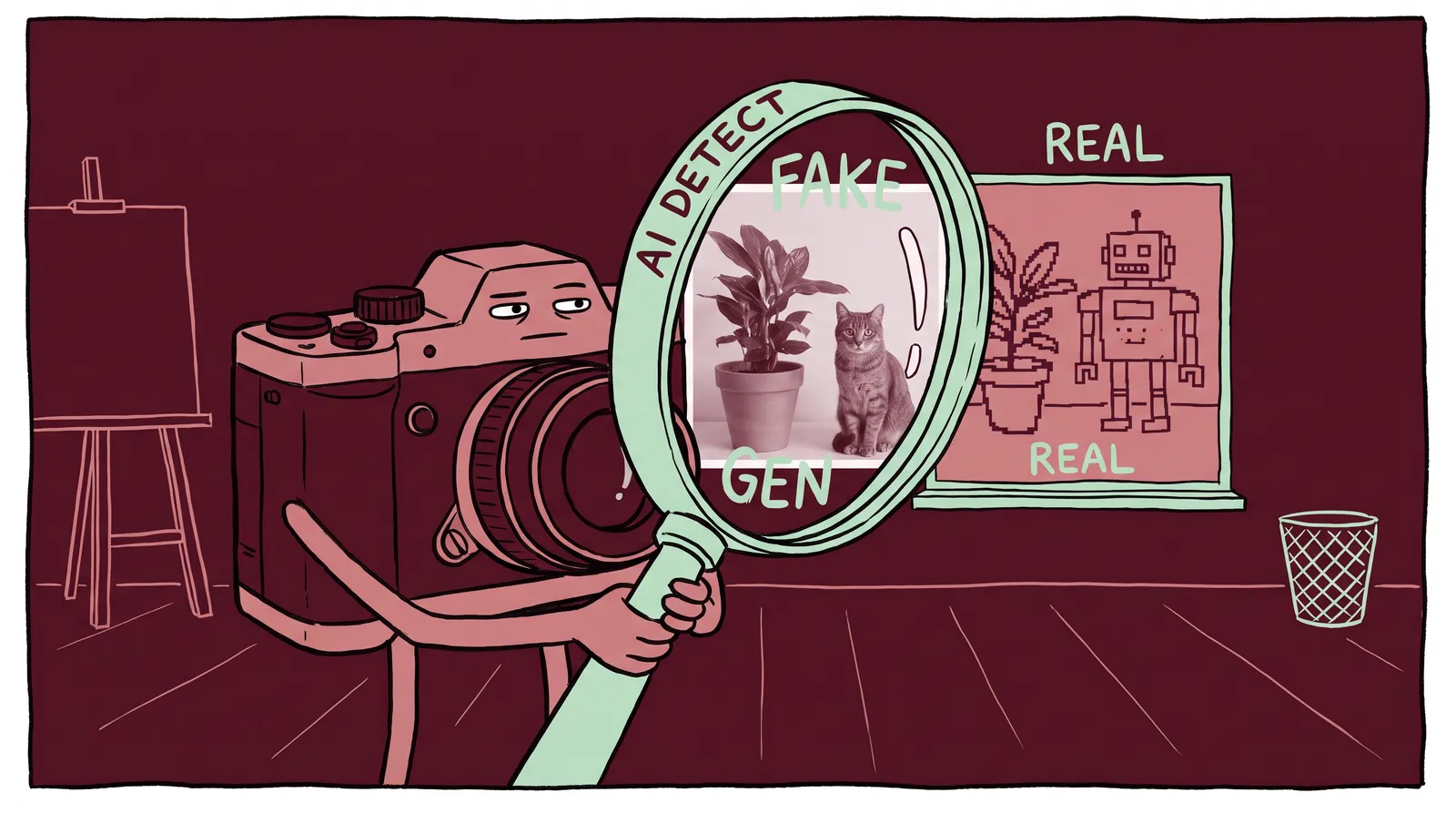
In May 2026, the media literacy group NewsGuard ran fifteen real news photographs from the U.S.-Iran war through five popular AI image detectors. One of them, ScamAI, called six of the fifteen fake. That is 40 percent of genuine Reuters, AP, New York Times and Guardian photographs labeled as AI-generated, by a tool built to do the opposite job.
This is not a one-off glitch. It is what happens when detection tools guess from pixel statistics instead of verifying where a photo actually came from. And it matters well beyond photojournalism: the same detectors, and the same blind spots, sit behind the tools people use to check whether a LinkedIn photo, a dating profile picture, or a headshot on a company site is real.
How AI image detectors work
An AI image detector is a classifier. It looks at pixel-level patterns, noise signatures, compression artifacts and color statistics, then outputs a probability that an image came from a generative model. It never sees where the photo actually came from. It is pattern matching, not verification, which is why a photo can be entirely real and still trip the same statistical alarms a synthetic one would.
That distinction explains why detector performance varies so much between vendors. In NewsGuard's test, Hive and Sightengine correctly cleared all fifteen authentic images, while ZeroGPT misflagged three (20 percent) and AI or Not misflagged one (6.67 percent). Averaged across the five tools, the false positive rate on real photos came out to 13.33 percent. Same input images, wildly different verdicts, because each tool is trained on a different slice of synthetic and real images and draws its decision boundary in a different place.

How often these tools actually get it wrong
The NewsGuard numbers are not an outlier. Pangram Labs, a company building its own image detector, published an internal comparison in July 2026 testing five tools on a clean set of 1,130 images. AI or Not misclassified 14.4 percent of real photos as AI-generated. Winston AI misclassified 10.6 percent. Resemble AI came in at 2.4 percent, and Sightengine at 0.4 percent. Pangram's own detector reported a 0 percent false positive rate on that set, and a 0.16 percent rate (roughly 1 in 625) on a separate batch of 10,000 photos taken before 2022, back when none of them could possibly be AI-generated.
Read those two studies together and the pattern is clear: false positive rates for these tools range from under 1 percent to over 40 percent, and which end of that range you land on depends entirely on which vendor you picked and which photos you fed it. There is no industry-standard accuracy figure to quote, because there is no industry-standard tool. Pangram also cites a 99.999 percent AUROC score on the NTIRE 2026 AI Image Challenge, an external competition it does not run itself, which matters more than a vendor's own internal numbers usually do. But one outside result for a single detector does not tell you anything about the other four tools sitting on the market next to it.
What makes a real photo look "AI" to a detector
Detectors misfire on real photos for reasons that have nothing to do with whether a human or a diffusion model made them. ZeroGPT's CEO told NewsGuard that images with "unusual lighting, high contrast, and blur" are more likely to get flagged, which is exactly the visual profile of a lot of conflict-zone photojournalism. ScamAI's founder pointed to a more basic issue: detectors need high resolution and high pixel counts to work reliably, so a photo that has been resized, recompressed or run through a messaging app's compression pipeline starts looking statistically synthetic even though nothing about its content changed.
That is bad news for the specific kind of photo this site's readers care about. A studio headshot, corporate portrait or heavily retouched dating profile photo already shares a lot of surface statistics with synthetic images: clean skin, even studio lighting, minimal background noise. If you want a sense of what makes an AI face look "off" to a human eye rather than an algorithm, our breakdown of the AI headshot uncanny valley covers the tells people notice, which turn out to be a different list from what trips a pixel classifier. Government photo systems run into the mirror-image version of this problem: our guide to why AI-generated passport photos get rejected covers how verification rules reject images for looking too synthetic, the same statistical tells working in the opposite direction.
A contest, a suspicious photo, and 69 innocent finalists
The Hasselblad Masters 2026 competition is a clean illustration of how this plays out once suspicion starts, rather than a detector. Hasselblad announced 70 finalists on April 28, 2026, out of more than 108,000 entries. Within a day, viewers had spotted a Street category finalist that showed two people at an outdoor table next to a Coca-Cola bottle with garbled, unreadable text, a classic generative-AI tell. Hasselblad responded that "any imagery fully or partially generated by AI is explicitly prohibited" and opened a review, warning it would revoke the shortlisted status of any confirmed violation.
The single suspicious entry did not just cost that photographer their spot. It cast doubt over the other 69 finalists, including photographers like Olivier Caune, who spoke publicly about being selected while the controversy over the other entry was unfolding. One flagged photo, real or not, is enough to put every neighboring photo under a cloud, whether a human judge or an automated detector is doing the flagging. Artists have lived with a version of this problem since well before photo detectors existed: illustrator Ben Moran spent more than 100 hours on a book cover in 2022, posted it to Reddit's r/Art, and was banned by moderators who insisted it looked AI-generated, telling him flatly they didn't believe his account of making it by hand.
Why this matters for your professional photo
If you are choosing a photo for LinkedIn or a company bio, the detection problem cuts in an unexpected direction. Ringover surveyed 1,087 US recruiters in June 2024 and found they correctly identified AI-generated headshots only 39.5 percent of the time, despite 80 percent believing they were accurate or very accurate at spotting them. In a side-by-side comparison, 76.5 percent of recruiters preferred the AI-generated headshot over the authentic one. But the same survey found that 66 percent of recruiters said they would be put off if they learned after the fact that a headshot was AI-generated, and 88 percent thought disclosure should be mandatory.
Put together, that means recruiters are bad at spotting AI headshots on sight, tend to like the ones they can't identify, and would react badly to being told the truth later. The same survey found recruiters correctly identified genuinely real headshots as real only 64.3 percent of the time, which means over a third of authentic photos got misjudged too. The confusion runs in both directions. For anyone using a generator like Starkie AI or shooting a traditional studio portrait, the practical risk is not that a detector will catch you. It's that the trust question shows up after the photo has already done its job on a call or an interview, when the mismatch between the photo and the person becomes obvious. For a wider look at where this trust gap comes from, see our piece on the authenticity paradox on LinkedIn, and if you want the reverse question, how to actually tell an AI headshot from a real photo walks through the tells that hold up better than any detector score.
Can provenance succeed where detection fails?
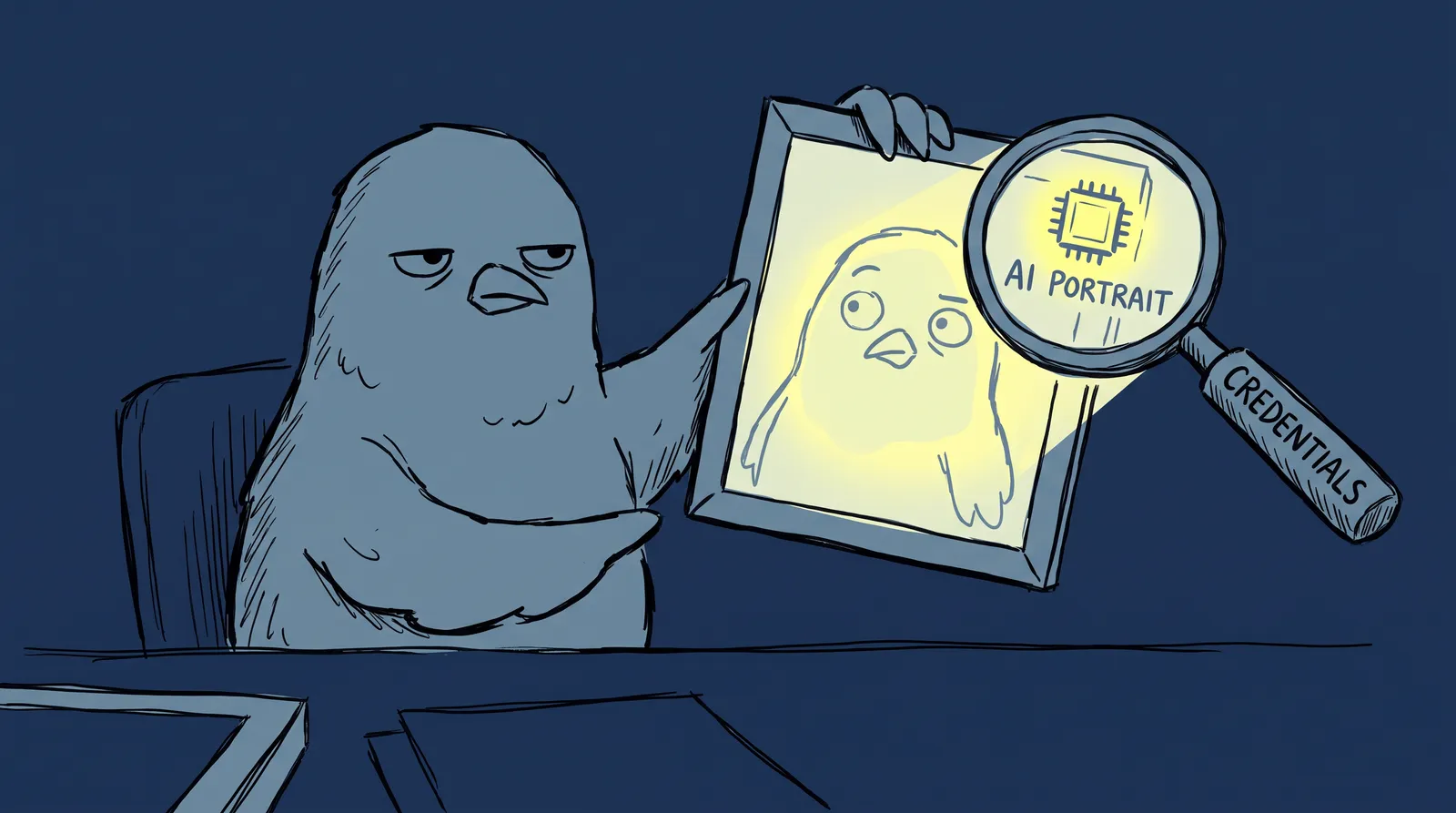
The industry's answer to unreliable after-the-fact detection is to stop guessing and start signing. The Coalition for Content Provenance and Authenticity (C2PA) standard, known to users as Content Credentials, embeds signed metadata at the moment a photo is captured or edited, recording the device, software and any AI involvement. According to Wikipedia's Content Credentials entry, Adobe has supported it in Photoshop since October 2020 and Lightroom since May 2024, OpenAI added it to DALL-E and ChatGPT image generation in February 2024, and LinkedIn began surfacing Content Credentials metadata to viewers in May 2024. Camera makers including Leica, Sony, Canon and Nikon have added signing at the point of capture on select models. So far, only OpenAI and Google have gone through full C2PA Trust List certification. Adobe and the camera makers have implemented the standard without that formal certification, which is a meaningful gap between "supports C2PA" and "verified to meet the C2PA standard."

Provenance is not a solved problem either. Nikon had to revoke the C2PA certificate on its Z6III after researchers found a vulnerability that let someone splice AI-generated content into an authentic-looking signed file while keeping the signature valid. As of mid-2026, no camera and no desktop editing application had actually passed the formal C2PA Conformance Program, meaning the standard exists but almost nothing has been certified against it yet. Signed provenance beats a probability score because it tells you something concrete about origin rather than a statistical guess, but a chain that breaks at one weak link is still a broken chain.
The practical takeaway
None of this means detectors are useless or that you should panic about your own photo getting flagged somewhere. It means a "likely AI" or "likely real" label from any single tool is a guess with a documented error rate, not a verdict. If a real photo of yours ever gets flagged, that says more about which detector someone used and what compression it went through than it does about the photo itself. The tools worth watching are the ones building verifiable provenance into the capture process, not the ones trying to reverse-engineer origin from pixels after the fact. Until that infrastructure is further along, the honest answer to "is this photo real" is still: it depends which tool you ask, and how it was trained.