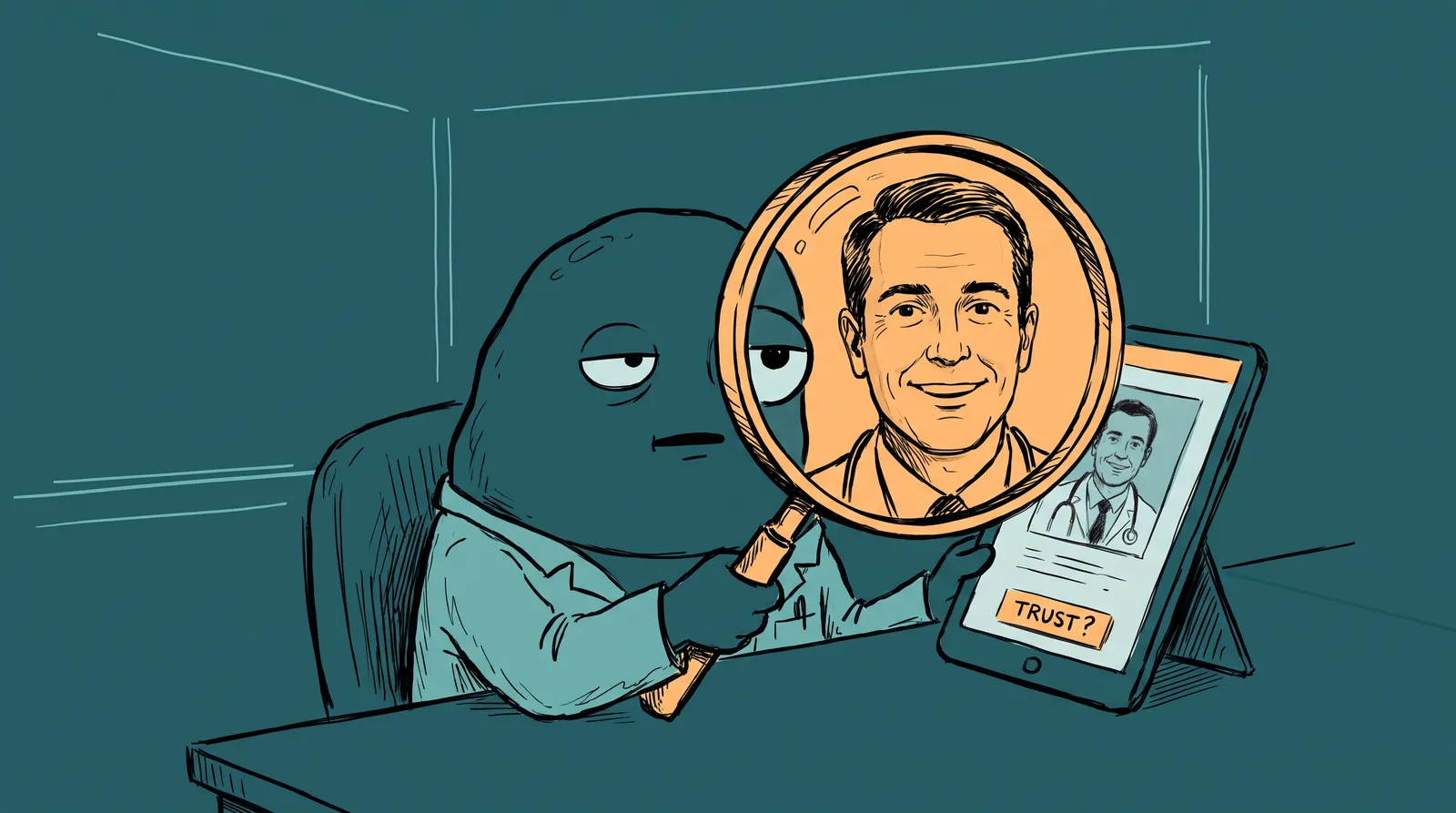
A recruiter sits at her desk, reviewing two LinkedIn profiles side by side. Both candidates have polished, professional headshots. Clean lighting. Confident expressions. Sharp business attire. One sat for a studio session downtown. The other used an AI headshot generator from their couch at 11 p.m. on a Tuesday.
The recruiter can't tell the difference. Neither can you.
Now ask: does it matter?
In 2025, millions of professionals are using AI-generated headshots on resumes, LinkedIn profiles, and company directories. But the legal and ethical frameworks governing their use are shifting faster than most people realize. The EU AI Act is now in phased enforcement. The EEOC is watching how AI intersects with hiring discrimination. States like Illinois and California have expanded biometric and AI disclosure laws. And employers are quietly drafting internal policies on AI-generated application materials, with some banning them outright.
What follows covers where the legal lines are being drawn, what the platforms allow, where the real controversies have erupted, and how to make decisions about AI headshots without exposing yourself or your organization.
The AI headshot boom: How we got here
The generative AI market is projected to reach over $1.3 trillion by 2032, growing at a CAGR of 42%, according to Bloomberg Intelligence. Image generation has been one of the fastest-growing commercial applications since late 2023, and AI headshot tools sit squarely in that wave. Tools like Aragon.ai, Secta.ai, HeadshotWithAI, Try It On AI, and Starkie AI have collectively served millions of users looking for a faster, cheaper path to a professional photo.
The driving forces are straightforward. Remote and hybrid work remain dominant. Nearly 28% of all U.S. workdays were still worked from home in late 2024, according to the WFH Research project led by economists Barrero, Bloom, and Davis. That means fewer in-office "photo day" opportunities and more professionals relying on outdated selfies or no photo at all. Traditional headshot sessions in major cities run $200 to over $1,000. AI tools deliver dozens of studio-quality results in minutes for $15 to $50.
The use cases run wide. Job seekers updating stale photos before a search. Executives refreshing their brand imagery across platforms. International professionals without access to Western-style portrait studios. And people with disabilities or appearance-related anxieties, for whom the AI process is more accessible and considerably less stressful than an in-person shoot.
Adoption has brought questions with it. Hiring managers ask whether the person is real. Legal scholars ask whether it counts as deception. That tension is what the rest of this covers.
The legal landscape in 2025: Regulations that actually apply to AI headshots
Here is what the law actually says right now about AI-generated professional photos.
The EU AI Act
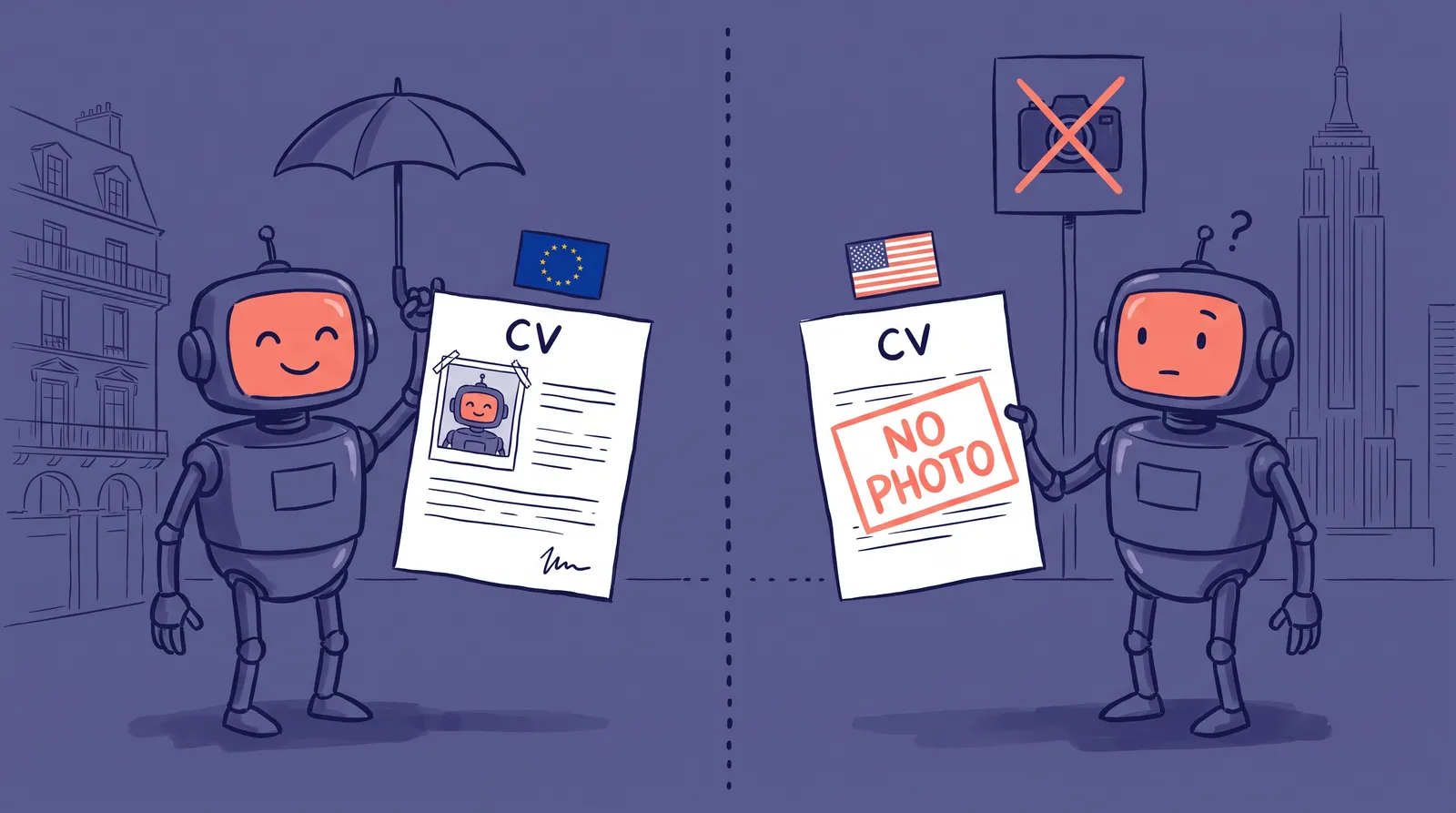
The EU AI Act entered into force on August 1, 2024, with phased enforcement beginning in February 2025. It classifies AI systems by risk tier. AI headshot generators generally fall under the low-risk category, treated as general-purpose AI applications. However, AI used in employment and recruitment decisions is classified as high-risk under Annex III of the Act.
What does this mean practically? The Act doesn't ban AI headshots. But if a recruiter or employer uses AI tools to screen, assess, or filter candidates based on their photos, they trigger significant obligations: risk management documentation, transparency disclosures, human oversight requirements, and bias testing.
EEOC guidance and Title VII
In the U.S., the EEOC released technical assistance on AI and the ADA in 2022, followed by guidance on Title VII and algorithmic decision-making in 2023. The core principle: an employer is liable for its selection procedures, even if a third-party AI vendor built them.
No EEOC ruling directly addresses AI headshots yet. But the concern is clear. If employers penalize candidates for using AI photos, or if AI-generated photos inadvertently standardize appearance toward certain demographics, disparate impact claims could follow. The risk isn't the photo generation itself. It's what happens when those photos become part of a screening process.
State-level legislation
Several states have passed laws that touch AI headshots. Illinois BIPA raises biometric data implications if an employer runs facial recognition on an AI headshot. California's AB 2655 and SB 942 cover AI content provenance and watermarking. Texas deepfake laws target the creation and distribution of deceptive synthetic media. And New York City's Local Law 144 regulates automated employment decision tools and requires bias audits.
Most of them target employers and platforms rather than individual job seekers.
The key legal distinction
No U.S. or EU law currently makes it illegal for a job seeker to use an AI-generated headshot on a resume or LinkedIn profile. The legal risk sits with employers using AI to evaluate those images, and with cases where an AI image crosses into material misrepresentation.

Enhancement vs. fabrication: Where courts and employers draw the line
Not all AI headshots are created equal. There's a spectrum, and where you land on it determines your risk.
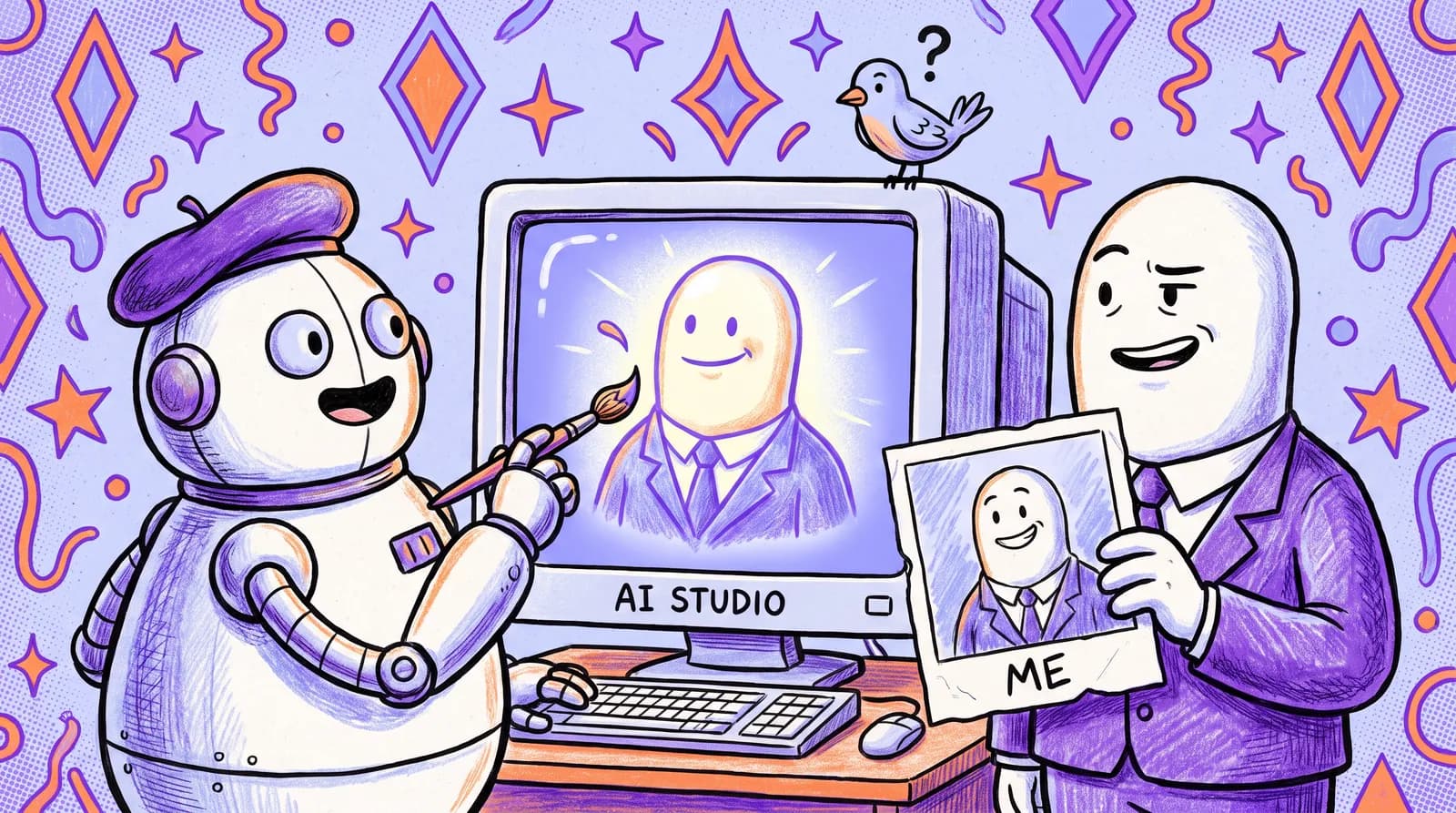
At one end is traditional retouching: removing a blemish, adjusting lighting, standard practice since digital photography began. Next is AI enhancement of a real photo, smoothing skin or improving a background or sharpening resolution, which is what most tools like Starkie AI and Secta.ai do. Then comes AI generation of a wholly synthetic image from selfies, giving you a new pose, outfit and setting while still being recognizably you. At the far end is AI generation that significantly alters your appearance: a different age, body type, skin tone or set of features.
The first three are broadly accepted. The fourth is where the risk starts.
Think of it like resume language. Courts have long distinguished between "puffery" (calling yourself a "dynamic leader") and material misrepresentation (claiming a degree you don't have). The Supreme Court's McKennon v. Nashville Banner Publishing Co. (1995) established that material misrepresentations on applications can limit an employee's legal remedies and justify termination. AI headshots occupy similar gray area. A polished version of you is puffery. A fundamentally different person is fabrication.

HR professionals increasingly apply one test: would a reasonable interviewer feel misled on meeting this person? If yes, it's a trust breach even where it isn't illegal. At least one widely discussed thread on Reddit's r/recruiting detailed a hiring manager rescinding an offer after determining that a candidate's headshot was AI-generated and significantly misleading.
Responsible AI headshot tools are designed to enhance how you actually look. Better lighting. A professional background. A polished presentation. Starkie AI, for example, is built around the philosophy of putting your best real self forward, not creating a fictional version of you. That distinction matters more than ever.
Platform policies: What LinkedIn, Indeed, and major job boards actually say
LinkedIn's Professional Community Policies state that your profile photo must be "a real photo of yourself." But the policy doesn't explicitly ban AI-generated images that depict you accurately. LinkedIn has introduced identity verification features (initially using a partner like CLEAR) and is exploring AI-generated content labels and provenance detection.
The ambiguity is real. An AI headshot that looks like you likely complies with LinkedIn's terms. A synthetic avatar that doesn't resemble you probably doesn't.
Indeed and other platforms
Indeed's terms require users to "present true and accurate information in all aspects" and prohibit content that "misrepresents your identity." Glassdoor, ZipRecruiter, and others use similar language. As of early 2025, none have issued explicit bans on AI headshots. But the words "accurate" and "authentic" give every platform broad discretion to act if they choose.
Corporate ATS systems
Some enterprise applicant tracking systems are beginning to flag AI-generated images using metadata or C2PA (Coalition for Content Provenance and Authenticity) content credentials. This emerging standard allows tools to embed tamper-proof metadata indicating how an image was created. Practically, this means your AI headshot might get flagged before a human ever sees it.
In practice, an AI headshot that authentically represents how you look is broadly compliant with current platform policies. One that doesn't, or an entirely fictional persona, risks account suspension or application rejection.
When AI headshots sparked real controversy
The viral LinkedIn experiment
In 2023 and 2024, several professionals posted about experimenting with AI headshots on LinkedIn. One widely discussed case involved an engineer who applied to multiple roles with his regular photo and then an AI-enhanced version. He reported significantly higher response rates with the AI photo, sparking a heated conversation about lookism, the well-documented bias in hiring based on physical attractiveness. The experiment didn't prove that AI headshots are deceptive. It highlighted that appearance bias in hiring is alive and well.
The rescinded offer
On Reddit's r/recruiting and r/jobs forums, multiple threads in late 2023 and 2024 detailed situations where recruiters set up video calls and found the candidate "unrecognizable" from their headshot. In one frequently cited example, a hiring manager pulled an offer, reasoning that if a candidate was willing to present a fundamentally false image, they were a trust liability. Fair or not, that's the reality of the current landscape.
The diversity and equity angle
Perhaps the most critical controversy involves AI headshot tools that were found to lighten skin tones, narrow features, or "westernize" appearances. These outputs raise serious discrimination concerns. Responsible tools must address this through diverse training data and rigorous bias testing. The technology itself is neutral. How it's trained and deployed determines whether it helps or harms.
Across all three cases the pattern holds. The controversy isn't that AI headshots exist. It's about transparency, accuracy, and the biases both humans and models bring to professional image-making.
What employment lawyers and HR leaders are actually advising
For job seekers
Employment attorneys generally agree: using AI headshots is legally safe as long as the image is a recognizable, accurate depiction of you. The risk is reputational and practical, not criminal.
The rule of thumb that has emerged is the driver's license test. Your AI photo should be recognizable to a hiring manager across a table, the way a driver's license photo is a formalized but accurate version of your face. Using AI to put yourself in a suit is safe. Using it to take 15 years off is not.
If you'd be comfortable showing the AI photo next to a current real photo, you're in the clear.
For recruiters
HR legal counsel is advising against making hiring decisions based on headshot appearance, whether AI-generated or not, because it opens discrimination liability. Some firms are moving toward photo-blind initial screening to eliminate bias entirely. This trend could actually make the entire AI headshot debate irrelevant in progressive hiring pipelines.
For HR teams drafting policy
Experts at SHRM and major HR consulting firms recommend covering AI-generated materials, headshots included, inside a broader AI-use policy rather than singling out photos, and focusing on material misrepresentation rather than the tool. Three lines are worth including: that reasonable AI enhancement of professional photos is permitted; that fabricating credentials, qualifications or identity by any means, AI included, is grounds for rescinding an offer or terminating employment; and that hiring decisions will not be based on candidate photo appearance.
The consensus is not to ban AI headshots. Set clear expectations around honest representation, and reduce how much weight appearance carries in evaluation.
A practical decision framework: When AI headshots are smart, safe, and appropriate
For job seekers
Four questions settle it. Does the headshot look like you on a good day? Would someone meeting you in person recognize you from it? Does it change your apparent age, ethnicity or fundamental features, because that's the line? And does the platform or employer have an explicit AI-image policy you should be following?
For employers
If you're assessing candidates on photo appearance, reconsider: that's where the legal risk lives whether or not AI is involved. If you have no written policy on AI-generated application materials, draft one, because ambiguity is its own risk. And if you're using AI tools to analyze candidate photos, you have almost certainly triggered high-risk EU AI Act obligations and EEOC scrutiny.

When AI headshots are especially appropriate
AI headshots make strong sense for professionals without access to affordable photography, people re-entering the workforce after a gap, international candidates applying across borders, and anyone who simply needs a polished professional image quickly. Tools like Starkie AI exist specifically to democratize access to professional presentation. To get the best results, it helps to know how to choose the right source photos for the AI to work with.
When to exercise extra caution
Regulated industries like finance, law, and healthcare often have strict credentialing and identity verification requirements. Government positions with security clearance photos, and any context where photos will be cross-referenced with ID documents, call for extra care. In these settings, your headshot and your face need to match without question.
The bigger picture
Back to the recruiter with two indistinguishable headshots. The point isn't that AI headshots are deceptive. Professional presentation has always involved curation: choosing the best suit, hiring a skilled photographer, retouching the result. AI generators are the newest tool in that line, and like the tools before them they can be used well or badly.
The law in 2025 is catching up and hasn't arrived. Until it does, the sensible move for job seekers, recruiters and HR teams is the same: use AI headshots that actually represent you, build hiring processes that don't over-index on appearance, and write the policy before a controversy forces you to.
Starkie AI is built around producing a headshot that looks like you at your best rather than like someone else. Try it and see.