At a LinkedIn conference in early 2026, a working headshot photographer was handed a lineup of portraits and asked a simple question: which one is AI? She studied the faces, the catch lights, the way the collars sat. Then she pointed. Confidently. Wrong.
That moment says less about her skill and more about where we are. Text-to-image models have crossed a perceptual line that most people haven't noticed yet. This isn't a story about chatbots writing your emails or art generators churning out surreal landscapes. It's about a quiet shift inside the professional portrait photography industry. The market is worth more than $3 billion. And two models are doing most of the pushing: Google DeepMind's Imagen 4 and Adobe's Firefly Image Model 4.
For years, AI portraits were a party trick. Fun to look at, easy to spot, useless for anything serious. That's changing. In 2026, AI portrait generation is becoming a genuine alternative to a studio sitting, with real strengths, real limits, and real consequences for photographers and everyday users.
So what exactly changed? And how close are we, really?
What actually changed: the architectural leaps behind the realism jump
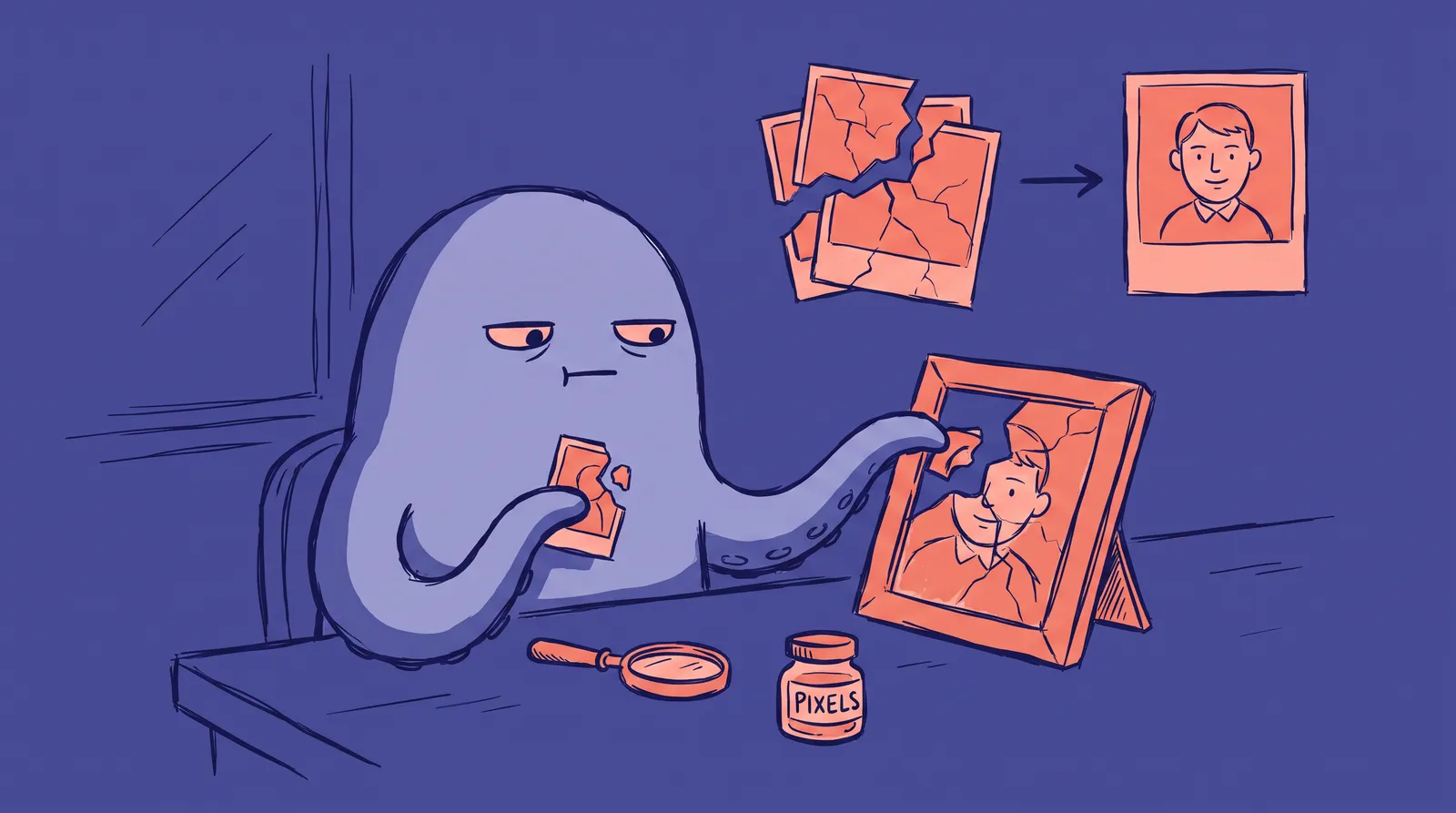
The jump from 2024 models to today's is a change in kind. The architecture thinks differently. Earlier diffusion models rendered images the way a nearsighted painter might work: nose two inches from the canvas, obsessing over a single eyelash while both eyes drifted out of alignment. That's why older AI faces had asymmetrical pupils, warped ears, and jawlines that didn't quite connect.
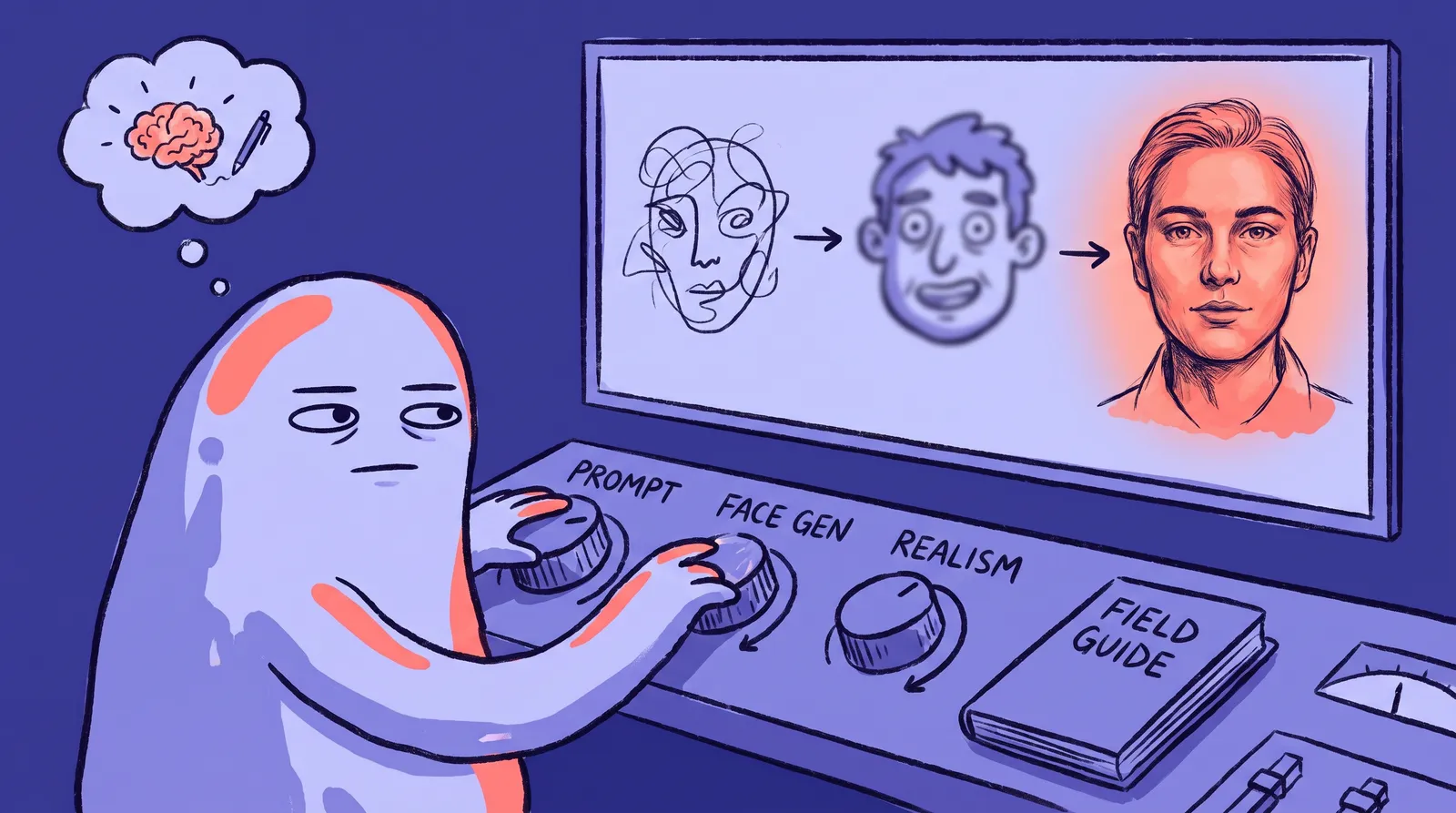
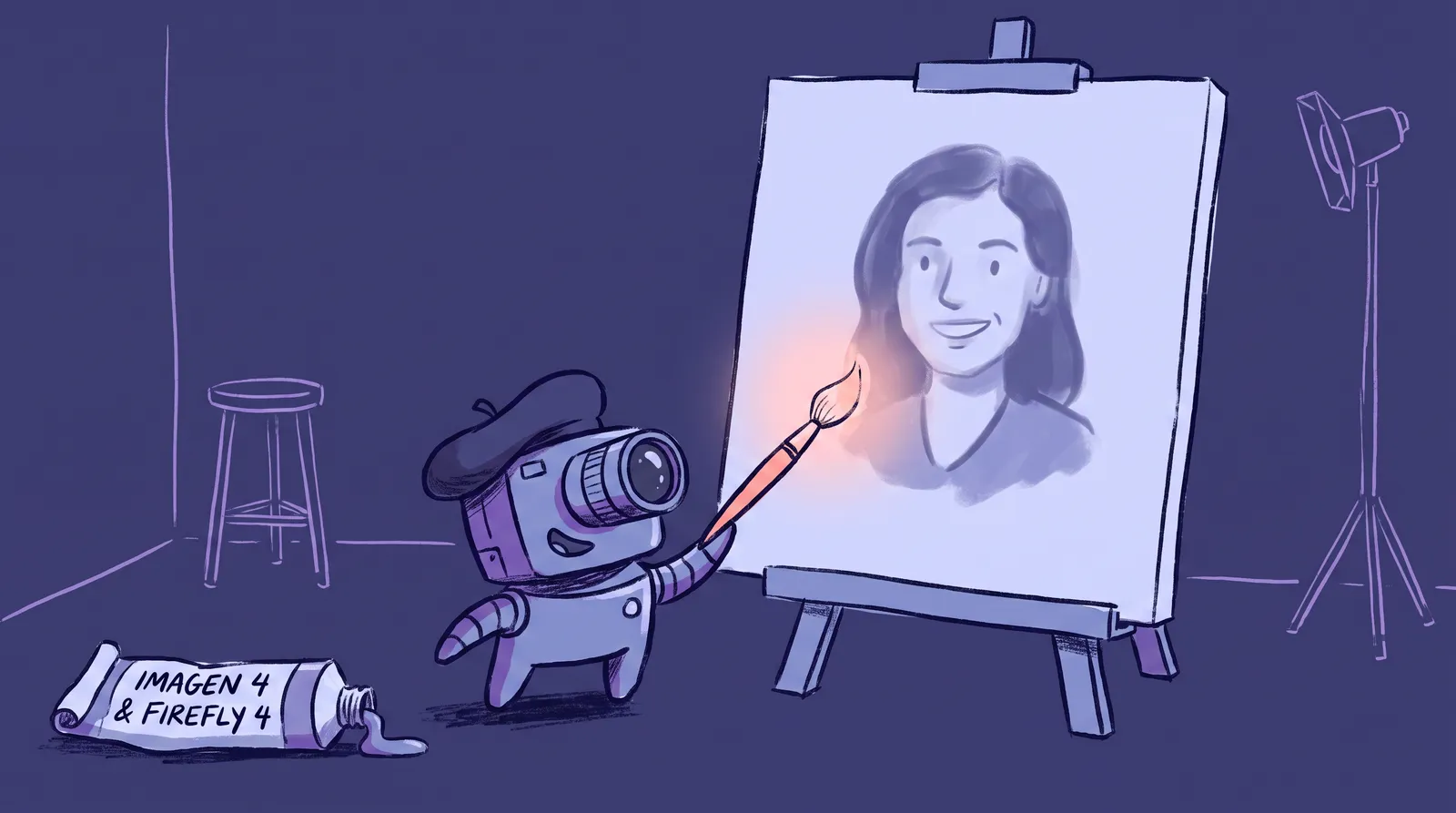
The 2025 to 2026 generation thinks about faces differently. Imagen 4, released across Fast, Standard, and Ultra tiers, and Firefly 4 both use Latent Diffusion Transformer architectures paired with large multimodal language backbones. According to MindStudio's breakdown of Imagen 4, the model processes the whole facial structure in a compressed latent space before it commits to pixels.
Here's the analogy that fits. Imagen 4 acts like a master portrait artist who steps back five feet from the easel. It checks global proportion, shadow lines, and the relationship between cheekbone and jaw before touching any fine detail. Its cross-attention layers route geometric dependencies across the entire face, so eye symmetry and proportion hold together. As Oakgen's Imagen 4 preview notes, the scale behind this is enormous, trained on Google's sixth-generation TPU fabric spanning over 100,000 chips.
Firefly 4 attacks the problem from a different angle. Its identity-conditioning pipeline encodes reference images more robustly, so a face survives style transfers and lighting changes without drifting. Anyone who used Firefly 3 remembers the identity drift on non-frontal angles, where a three-quarter turn could hand you a stranger. Firefly 4 mostly closes that gap.
Both models also got much better at high-frequency detail: skin texture, individual hair strands, the tiny catch light in an iris. That microdetail layer is exactly what used to betray an AI image at a glance. Better training data plays a role too. Earlier models leaned on a "beauty filter" default that homogenized everyone into the same glossy face. More diverse, licensed datasets are pulling models away from that sameness.

The portrait gauntlet: how each model handles the hard stuff
Stress-testing these honestly means starting with the portrait challenges that historically exposed AI. Neither model aces all of them.
Glasses were a longtime nightmare: melted nose pads, blurred eyes behind glass, painted-on glare. Imagen 4 now calculates real lens physics, rendering refraction around the cheekbone line inside thicker lenses and simulating subtle anti-reflective coating shifts. Firefly 4 uses material-aware rendering built on Adobe's physically-based rendering training sets, treating titanium, wireframe, and tortoise-shell acetate as distinct materials with accurate specular highlights. The difference shows. Both still stumble on oversize frames that warp the facial silhouette at 45 degrees, and progressive or tinted transition lenses still produce muddy blur.
Diverse skin tones are the industry's most documented failure mode. Imagen 4's subsurface scattering renders light passing through translucent skin, showing natural warmth, pores, and faint moles across deeper Fitzpatrick V and VI tones. Firefly 4 aims for a balanced, studio-retouched feel. Both show measurable gains, but highlight and shadow balance on the deepest tones can still tip toward artifacts. Progress, not perfection.
Non-standard lighting is next: dramatic side light, backlit windows, mixed color temperature where warm window light fights cool office fluorescent. Both models handle these far better than before, though each still retreats to safe three-point studio lighting when a prompt leaves room for interpretation.
Age and non-idealized features matter most for authenticity. Do the models faithfully render wrinkles, asymmetry, and distinctive features, or do they smooth everything into idealization? TechRadar's comparison of Firefly Image Model 4 against other generators found real gains in photographic realism, but the smoothing impulse hasn't vanished. Push either model with a neutral prompt and it still nudges faces younger and softer than reality.

Case study: building a headshot from scratch vs. from a reference photo
Two scenarios cover almost every real use case.
The first is text-only. Say you want a LinkedIn headshot for a fictional startup founder. With Imagen 4, you need photography vocabulary to get professional results. Something like: "A professional 85mm portrait of a 35-year-old female tech founder, soft Rembrandt lighting, shallow depth of field at f/1.8, neutral warm office background out of focus, realistic skin pores, subtle smile, off-white blazer."
The output is impressive. But zoom to 100% on a 4K display and you find mismatched iris rings, asymmetric collar stitching, or teeth fused into a single white block. That's the gap between "stunning on a phone" and "usable for work." Firefly 4 softens the learning curve with slider controls for aperture, lens, and lighting presets, so you don't need the jargon.
The second is reference-guided, which is the core consumer use case and where things get interesting. You upload one to six casual phone selfies and ask for a professional portrait. Firefly 4's identity-conditioning and Imagen 4's subject reference mode both shine here. The trouble starts when your reference photo is dim, low-res, or shot at an odd angle. Identity fidelity wobbles, clothing invents details, expressions flatten.
That leads to a concept worth naming: the uncanny valley of identity. When a model gets 80% of your face right, the missing 20% feels more wrong than a total stranger would. Your own eye is calibrated to your face. A slightly narrow jaw or shifted eye color reads as unsettling. This is the central UX problem for AI headshot products, and it explains the market's biggest complaint. Proshoot's 2026 statistics report that face likeness drift is cited by 63% of dissatisfied users as the reason they discard generated photos.
It also explains why a product category exists. Purpose-built tools like Starkie AI layer fine-tuning and post-processing on top of base models to fight exactly this drift. As described in roundup of top avatar generators, the goal is preserving identity likeness while re-lighting and swapping in professional backgrounds. The base model is the engine. The product is the guardrails around it.
The economics help explain the pull. Proshoot's data pegs an average AI headshot package at $25 to $35, against $150 to $650 for a traditional corporate sitting. Adoption climbed from 8% of professionals in 2021 to over 58% by 2025 to 2026.
What AI still gets wrong
Several structural gaps remain wide open in mid-2026.
Consistency across a set is the first. A studio photographer delivers 20 to 50 coherent frames of the same person, same face, different angles. AI models still show semantic identity drift between separate generations: a jawline that widens slightly, ear placement that shifts, iris color that wanders. For a corporate directory that needs uniform output, this matters enormously.
True expressiveness is the second, since authentic micro-expressions are hard to prompt reliably. A genuine laugh, a thoughtful half-smile. AI portraits tend to land in a narrow band of pleasant neutral that reads as slightly inert to a trained eye.
Legal and provenance questions are third. Commercial use rights, training data disclosure, and authenticity verification through C2PA metadata are all unsettled. Some enterprise clients still require traditional photography for compliance reasons alone.
Recruiter sentiment is the fourth, and it's a human backlash rather than a technical gap. Capturely's analysis of companies moving away from AI headshots cites a Ringover survey finding that 66% of recruiters are turned off when they realize a candidate's profile photo is AI-generated, reading it as a lack of effort or trust. Gloss doesn't automatically buy credibility.
Then there's context collapse. An AI headshot exists without a real moment, a real photographer, or a real room. Whether that immateriality matters professionally is an open cultural question, and it's being argued out in real time.
What the next 12 months could look like
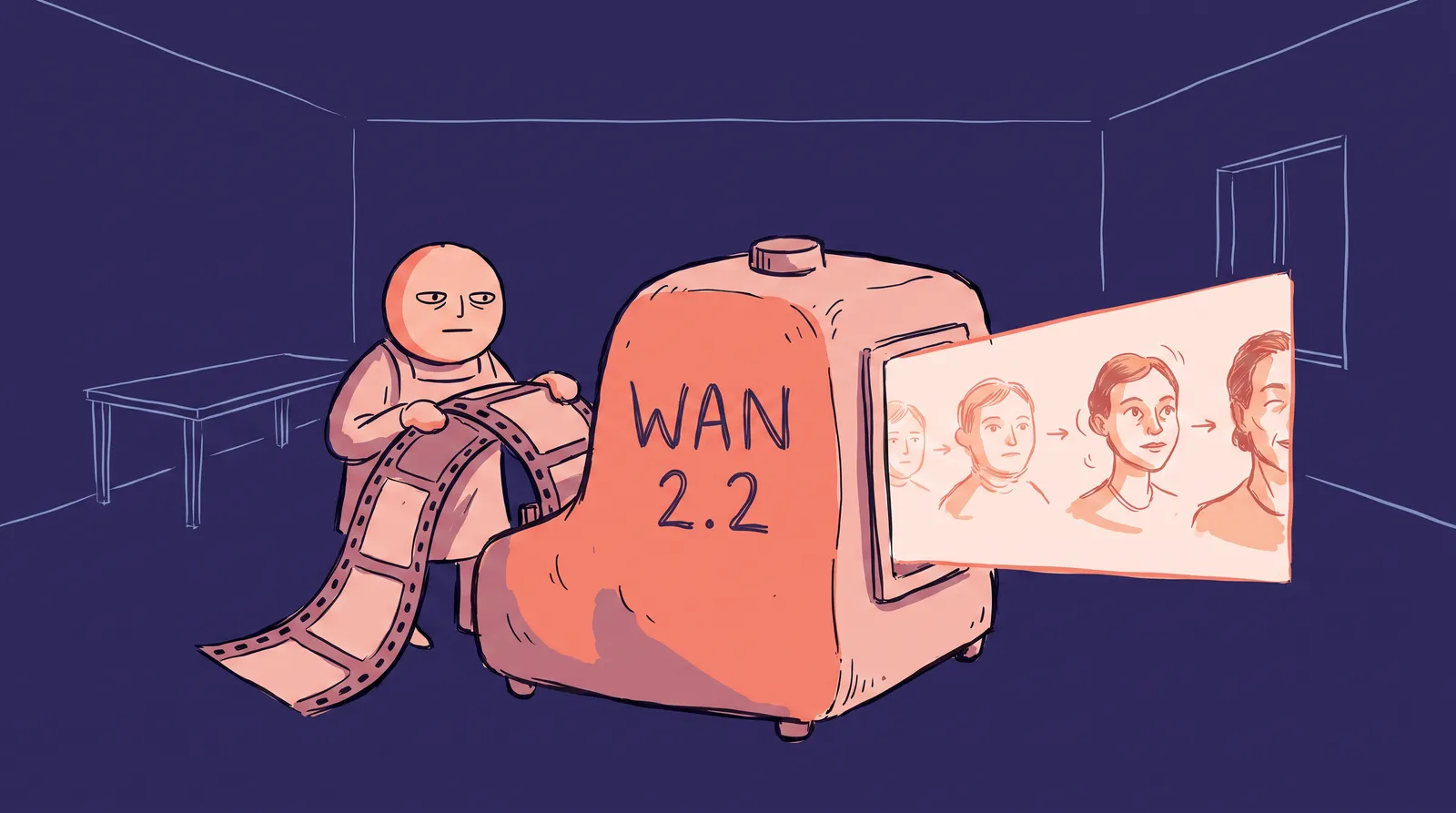
Video and temporal consistency are the next frontier. If a model can hold a coherent face at rest, the next step is holding that same face across frames: short headshot reels, animated profile photos. Adobe has already announced integration of its Firefly Video Model alongside partner engines, and Adobe's own tutorials show how to turn static portraits into motion-ready clips. On the research side, work like GeoFace's geometry-constrained diffusion points toward locking subject identity across multi-view camera sweeps.
On-device and real-time generation is the other shift. Moving from cloud inference toward local generation means faster iteration, better privacy, and new use cases like live virtual headshots during video calls.
Personalization is getting faster too. LoRA-style fine-tuning that once took hours now approaches sub-five-minute personal model training. The line between "an AI headshot" and "an AI that knows your face" keeps blurring. That's the space purpose-built tools are designed for.

The photographer's role won't disappear. It'll split. Volume and commodity work, corporate directories, LinkedIn profiles, app avatars, moves heavily to AI. High-stakes, emotionally resonant portraiture, editorial and executive personal branding, stays human-led, with AI as a workflow tool.
So, should you use one?
The answer depends on who's asking.
For an everyday user, AI headshot tools are genuinely useful in 2026. Great for LinkedIn, dating and networking apps, remote-first professional presence, and speaker bios. They still can't replace a personal branding shoot or a high-stakes executive portrait. One rule: inspect at 100% zoom before you post. Check the eyes, earlobes, glasses frames, and background blur.
For a photographer, the move is to specialize rather than panic. Let AI accelerate the parts it's good at: background replacement, lighting correction, rapid concept visualization. Then focus on the human territory, the emotional read, the brand accuracy, the intra-session consistency machines still can't match. Capturely's corporate analysis frames this same split cleanly.
For a business or HR team with a distributed workforce, AI headshot programs offer consistency, speed, and cost savings that can run over $10,000 per cycle against multi-city shoots. Build a disclosure policy before you roll it out. Employees notice, and so do candidates.
If this is the moment you're weighing your own professional presence, Starkie AI was built for exactly this use case: professional-grade AI headshots that apply current model capabilities with the guardrails everyday users actually need.
Real or fake is the wrong question now
Back to that photographer who picked the wrong photo. The point was never that AI fooled a human. The point is that the question itself is changing. In 2026, "real or fake?" is less interesting than "good enough for what purpose, and for whom?"
Imagen 4 and Firefly 4 represent genuine architectural maturation, not another gimmick cycle, and the portrait industry is feeling it in concrete ways. There are things these models do exceptionally well, things they still get wrong, and a set of human, legal, and cultural questions that raw capability can't resolve on its own.
The next 12 months of model development will likely matter as much as the last 24. The tools and practitioners who understand the technology, not just the output, will use it best. And if this article made you curious about what current AI headshot technology can actually deliver for your own presence, that's exactly the moment Starkie AI is built for.