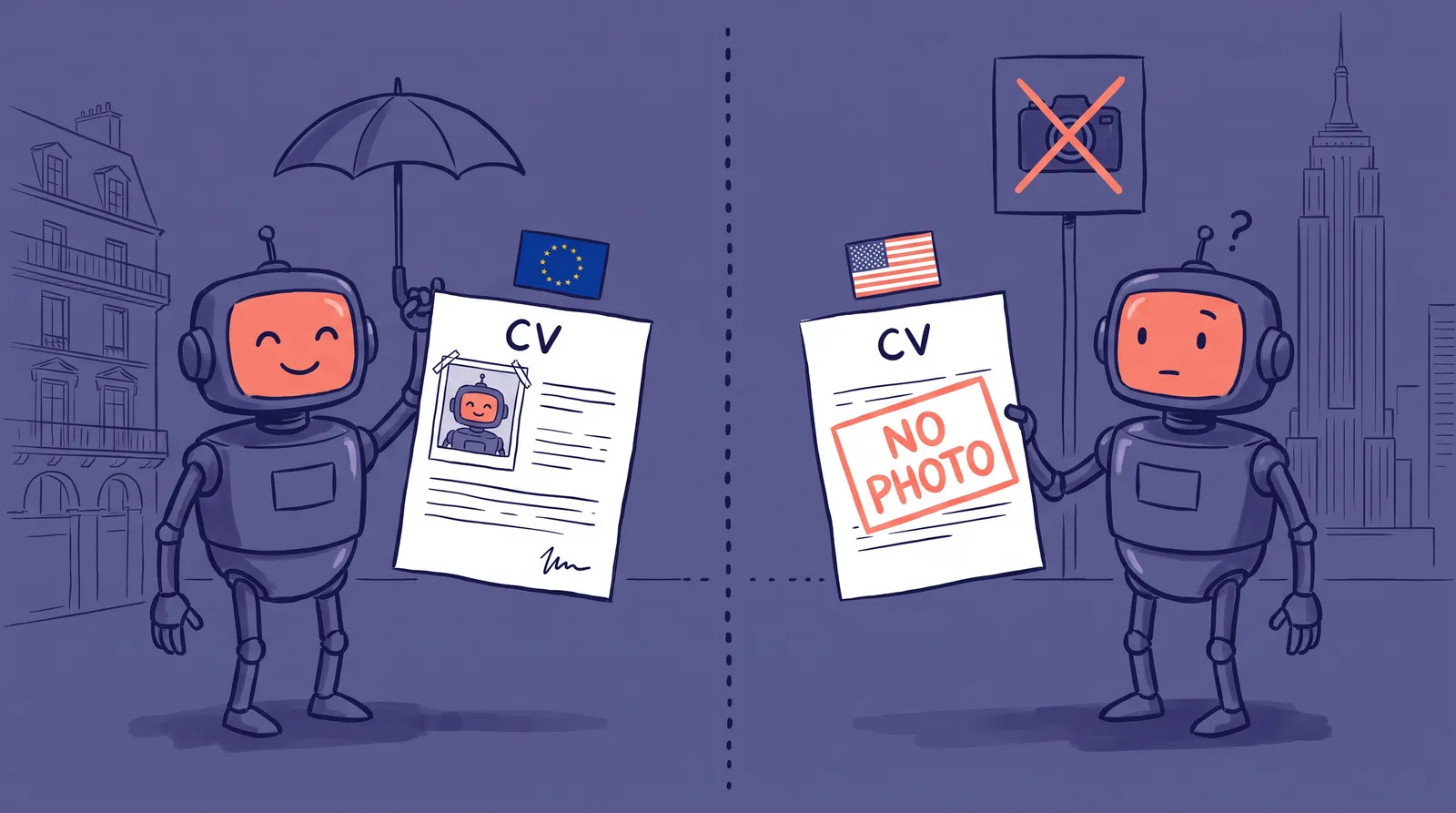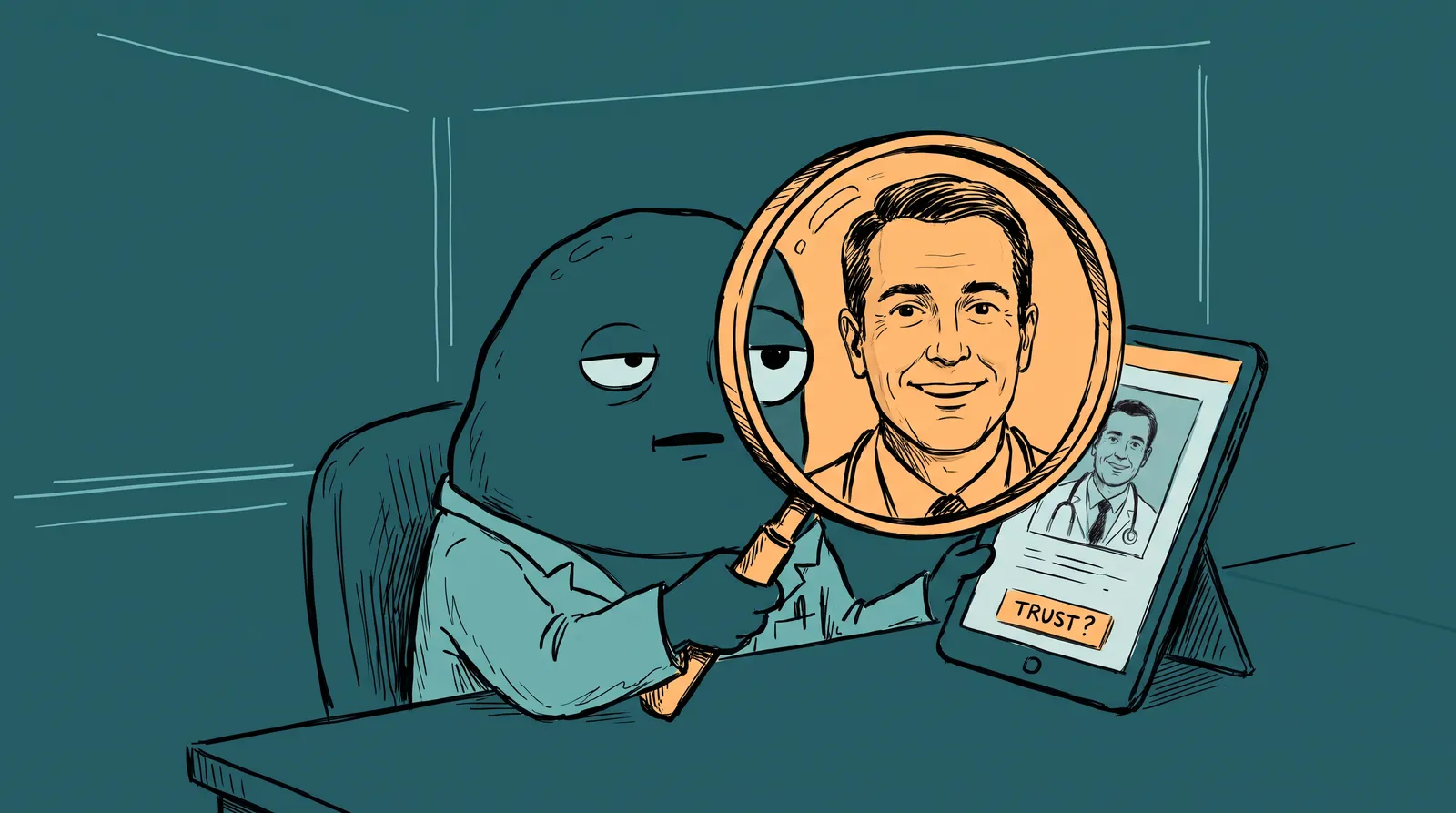
Patients pick doctors partly by their faces. Several studies of Chinese online health platforms found that a profile photo changes who gets chosen, and the details of the photo matter too. The findings come from a different healthcare system than yours, so read them as signals, not laws.
Still, they are some of the only hard data on a question every clinician with a website faces: what should the picture next to your name say?
Does a profile photo change which doctor patients pick?
Yes. Physicians who show a photo attract more consultations than those who do not, at least on the platform researchers have studied most closely.
Qin and colleagues analysed 10,446 physicians on Good Doctor (haodf.com), a Chinese online consultation platform, using data scraped between December 2020 and June 2021. They coded the avatar as a simple yes or no: does the physician have one? Having one had a significant positive effect on patient selection (β = 0.0860, p < 0.01). The authors suggest that patients feel a profile is more authentic when a real face is on it, which eases some of the fear of consulting a stranger.
The caveats are real. The data covered two conditions, lung cancer and pneumonia, on a single platform. The study also said nothing about photo quality. It only asked whether a photo existed.
A commercial claim points the same way. Physicians Weekly cites Healthgrades as saying 52% of consumers would pick a four-star doctor with a photo over a five-star doctor without one. That is a secondhand figure from a company with a stake in profiles, so treat it as a hint, not a finding.
What do patients actually look at?
They look at the photo longer than they admit. In an eye-tracking experiment, Shan and colleagues showed 42 students eight variations of a physician profile on China's Chunyu Doctor app. Participants said they found the photo less useful than other patients' comments. Their eyes said otherwise: they fixated on the photo significantly longer.
A follow-up questionnaire with 254 valid responses found that the profile photo had a significant positive impact on affective trust (P = .001). Affective trust is the gut-level kind, the feeling that someone is warm and on your side. In their model it mattered more to physician choice than cognitive trust, which is the rational weighing of credentials.
Both samples were young. The eye-tracking group were students aged 20 to 25, and 87.4% of survey respondents were under 30. Older patients, who see more doctors, may read photos differently. Nobody in these studies tested that.

Should a doctor smile in a headshot?
Keep it small. The evidence is thin, and one large study found smiles weakened the link between patient concerns and choices.
Bai and colleagues in Heliyon (2024) studied 12,890 physicians and 746,981 patient reviews from Good Doctor Online. They used a ResNet-18 neural network to read three features from each photo: age, smile and glasses. The network was about 90% accurate on age, 94% on smiles and 97% on glasses.
Then they checked how each feature changed the link between patients' concerns and their choices. The results ran in different directions:
- Age: older-looking physicians strengthened the positive effect of perceived competence and warmth.
- Glasses: these strengthened it too. The authors read them as a symbol of professional image.
- Smiles: these weakened it, across every topic they tested. The authors suggest excessive smiling may read as not serious enough.
Read that last one carefully. It does not show that patients dislike warmth. It shows that, in reviews of a specialist, a broad smile was linked to weaker effects than a calm expression. For a dermatologist, a pediatrician and a surgeon, the right level of warmth is probably different, and this study cannot tell you where each one lands. Patients in another culture may weigh the same smile differently.
Why glasses help and where AI struggles with them
Glasses helped in the Heliyon data, which matters if you wear them. It also matters if you plan to use an AI generator. Eyewear is a known weak spot for these tools. If you wear glasses every day, patients who know you will expect them in the photo. We cover the failure modes in why AI headshot generators struggle with glasses.
What does this mean for your own profile?
It means the basics matter more than polish. A real photo of you, clearly lit, with a composed expression, does most of the work. The studies suggest a few things worth acting on:
- Have a photo. Both the 10,446-physician study and the eye-tracking work point to a real face helping.
- Use a recent image. Patients will meet the person in the picture, and a photo that looks ten years old undercuts the authenticity that made the photo useful.
- Keep the expression warm but composed. Aim for the look you would give a nervous patient at the start of a visit.
- Keep the frame simple. Neck and shoulders, a plain background, no distracting props.
First impressions work the same way in other fields. We have written about what a profile photo signals to strangers and about what recruiters see first in LinkedIn photos. Patients scanning a directory face the same quick decision as a hiring manager scanning a feed, though the stakes differ. Our piece on the science of a trustworthy face covers how expression feeds into that judgment.
Where does AI fit for busy clinicians?
An AI headshot can work if it looks like you and you say nothing false with it. Booking a studio slot around clinic hours is hard. Generators such as Starkie AI build a set of professional portraits from your own selfies, so you can pick one that matches how you look now.
The test is simple. Would a patient who has met you recognise you from it? If the face is smoother, younger or a different shape, the photo defeats its own purpose. Trust is the reason a profile photo works, and a photo that misleads spends it before the appointment starts. Also check your employer's and licensing body's rules on profile images before you publish.
For the same reason, the studies' most useful lesson may be about what they leave out. None of them asked whether a photo was taken by a photographer or generated. They asked whether patients felt they were seeing a real person. Give them that, by whatever route, and you have done the part the research supports.