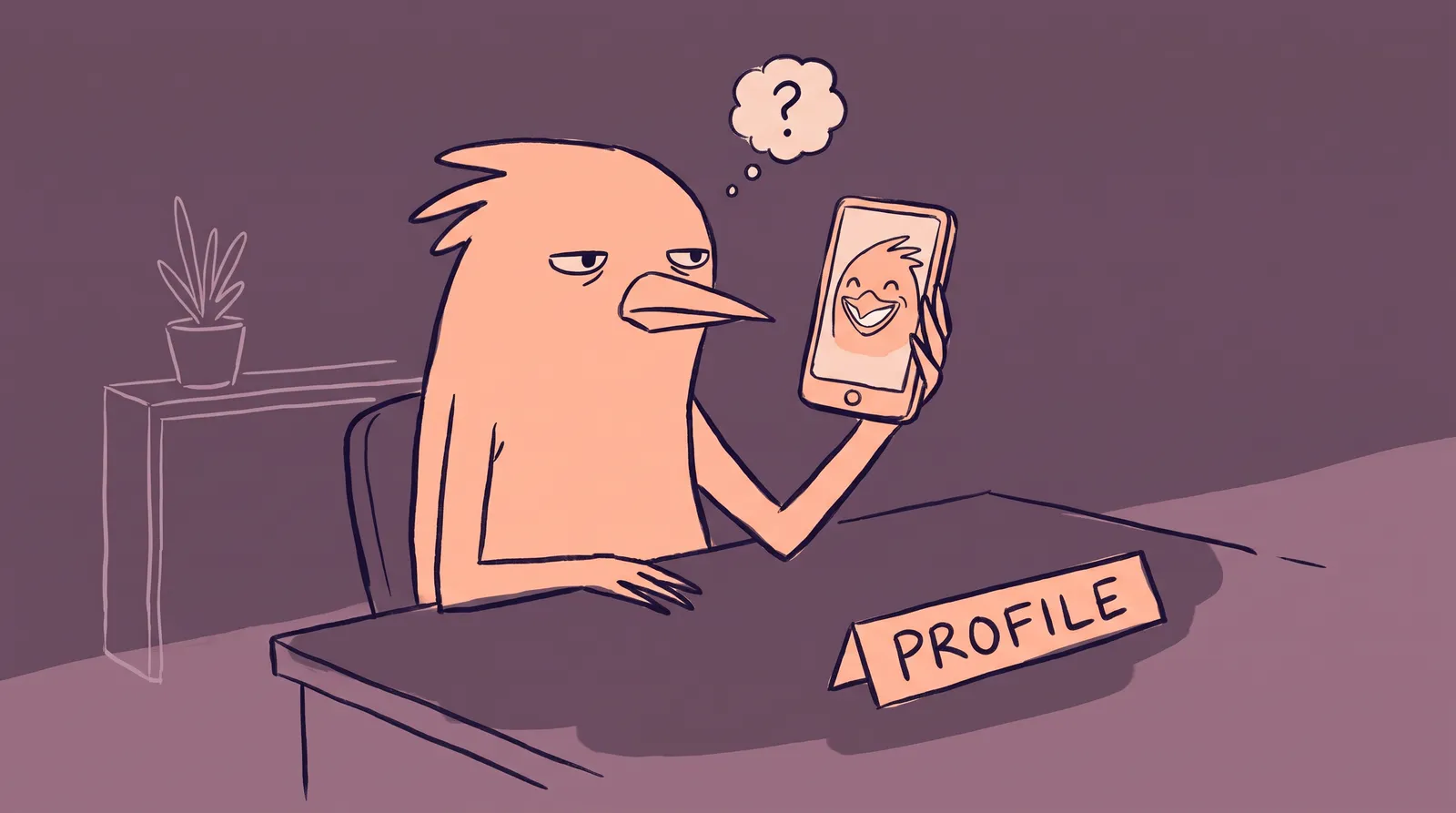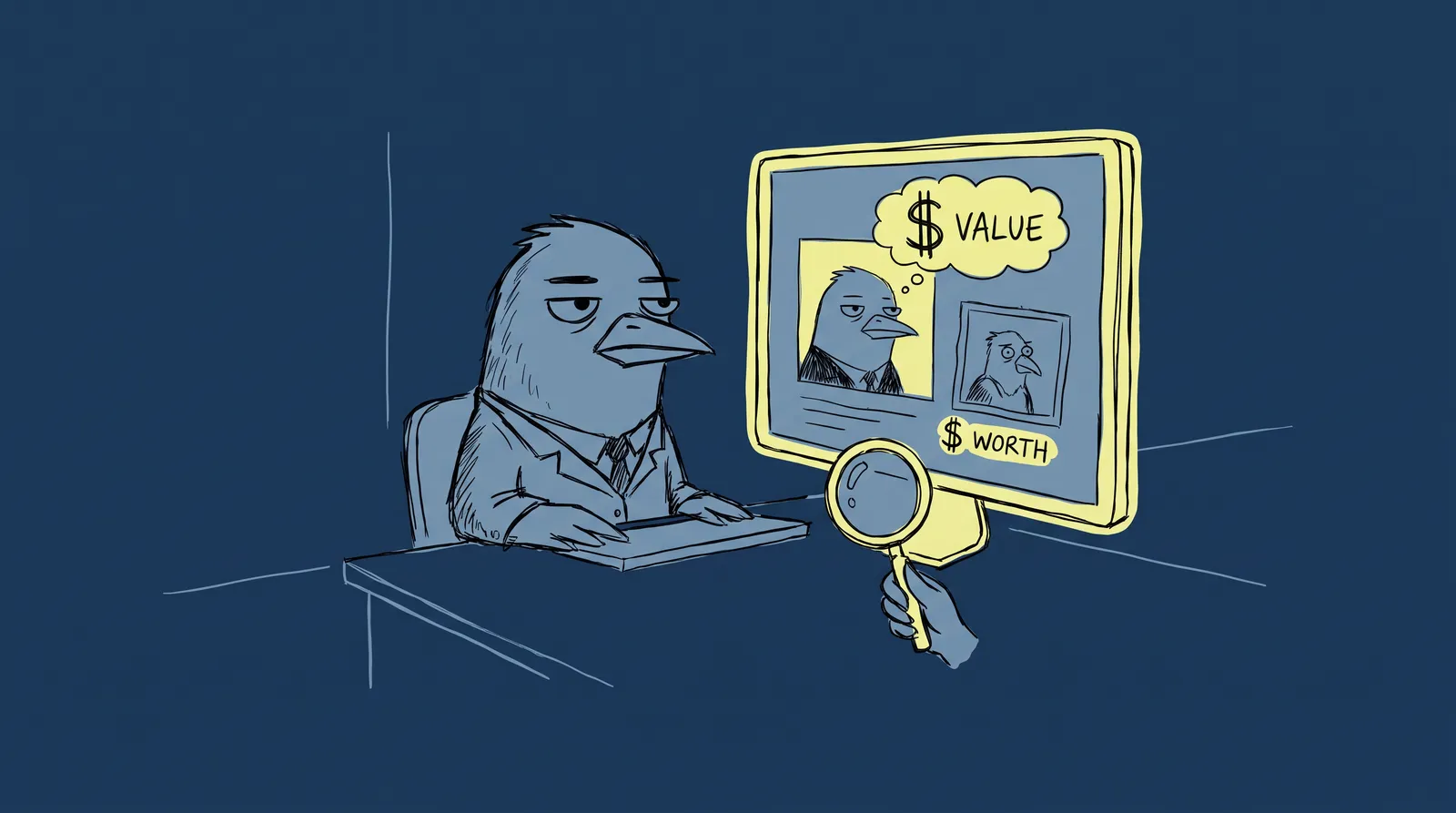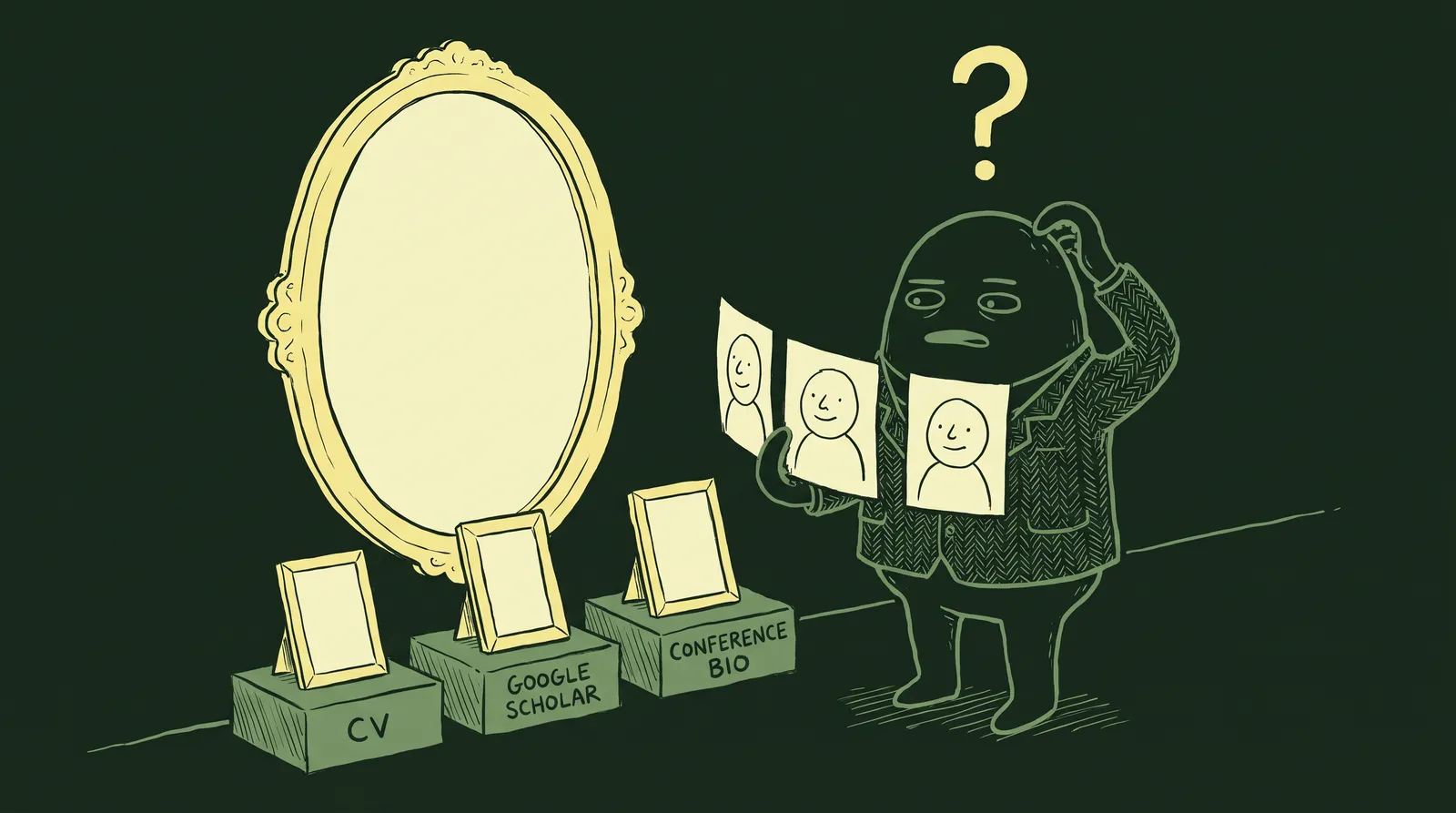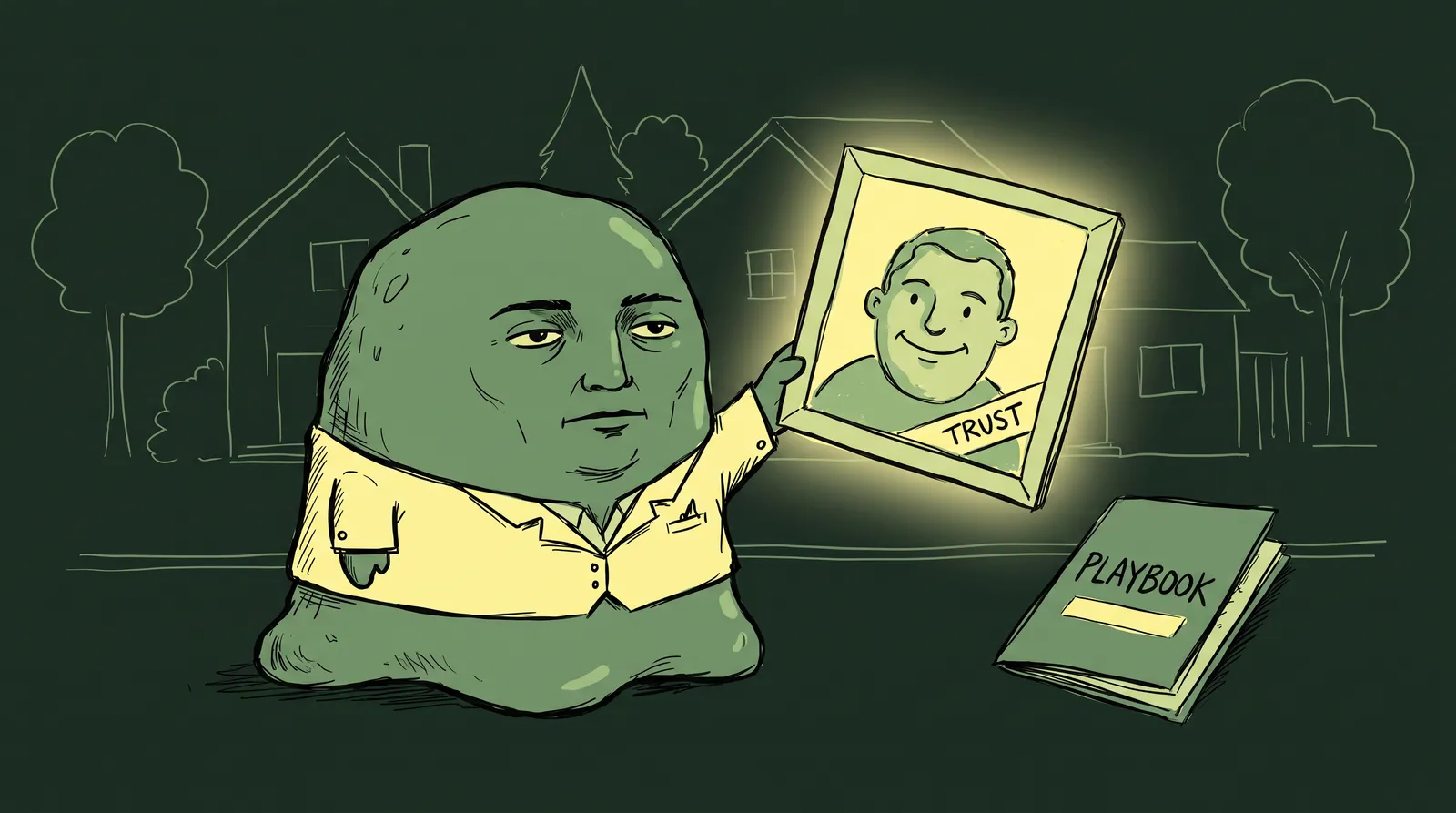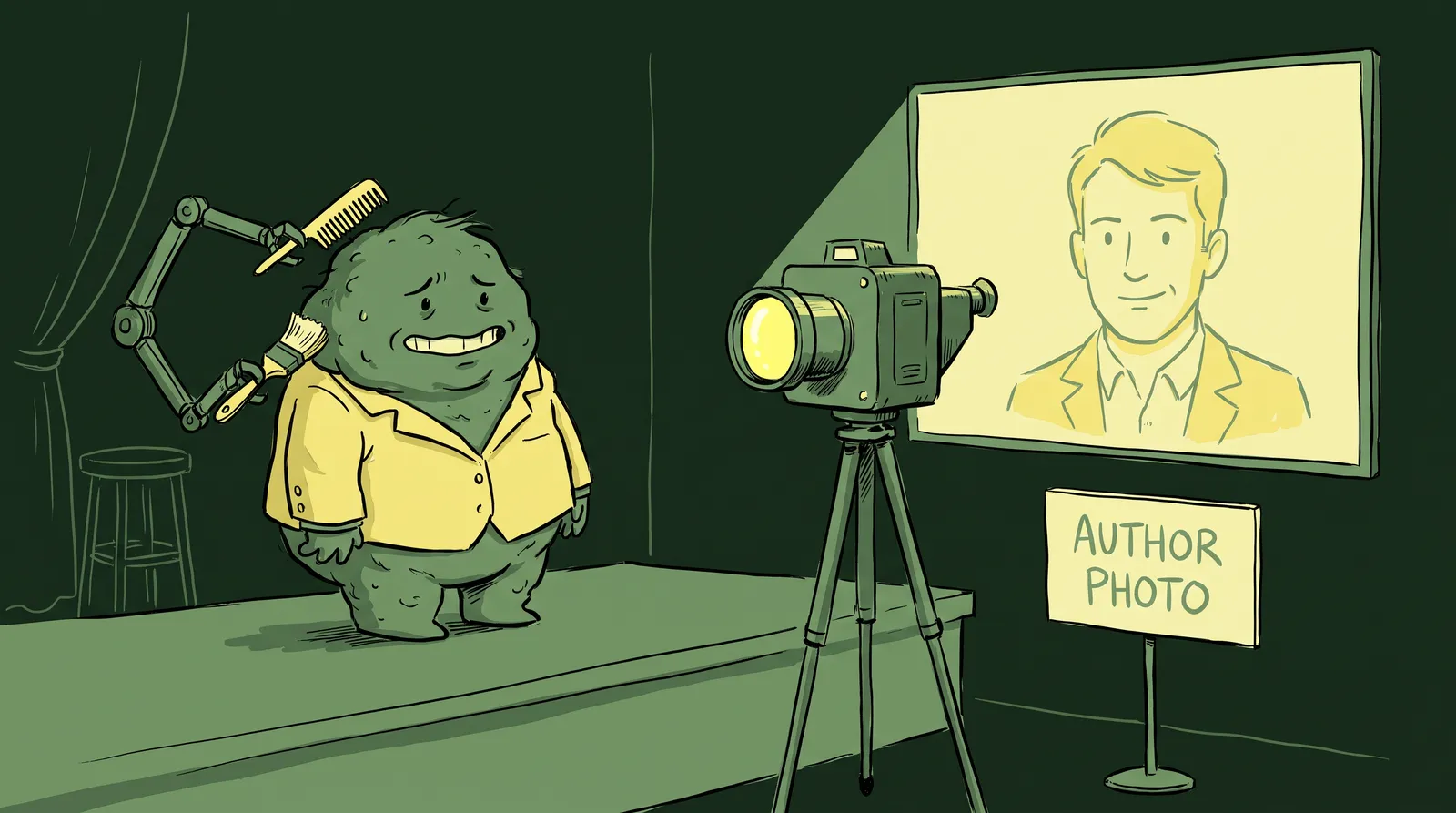
Query a literary agent and you will spend weeks on your opening line and not a second on your photo, because nobody asks for one. Sign a book deal eighteen months later and a publicist emails you asking for a "high-res author photo" by Friday, and most writers open their camera roll and realize the newest flattering picture of themselves is from a wedding three years ago.
Over 3.5 million self-published titles with ISBNs came out in the US in 2025 alone, up 38.7 percent from 2.5 million the year before, according to Publishers Weekly. Every one of those books needed an Amazon Author Central photo, a Goodreads profile picture, and usually a back-cover author bio, and almost none of those authors had a publicist telling them what any of that actually required. This is the part of publishing a book that nobody teaches, so most people wing it, the same blind spot academics run into with their own overlooked headshots: nobody explains the rules until you're already breaking one.
Why does your author photo matter if you're not the one on the cover?
Your author photo is the only real-world contact most readers will ever have with you. The cover sells the book. The photo, tucked on the jacket flap or the Amazon page or your Goodreads profile, sells the idea that a specific person wrote it, and that idea is doing more work than most authors give it credit for.
Goodreads puts it plainly on its own author help page: "You never get a second chance to make a first impression, and the picture is the first thing that catches the reader's eye." The same page notes that readers "pay attention to the person behind the pages," and it draws a line that a lot of authors miss: don't use your book cover as your profile photo, because it reads as self-promotional rather than personal.
That distinction matters more than it sounds. A cover is marketing. A face is a relationship. Researchers Janine Willis and Alexander Todorov found that people form trustworthiness judgments from a face after just 100 milliseconds of exposure, and that giving viewers a full second to look longer barely changed the verdict, according to their study published in Psychological Science. More time made people more confident in their first read, not more accurate. Whatever your author photo says about you, it says it almost instantly, and a reader rarely goes back to reconsider.
What do publishers and literary agents actually want?
Here's the part that surprises most first-time authors: nothing, at first. Query letters go out with a manuscript and a short bio, not a photo, and agents don't ask for one to evaluate your work. The photo only becomes real once there's a book deal and a publicity department attached to it, usually months before the release date.
Penguin Random House's author advice blog lays out what publicity teams actually ask new authors to do at that stage, and it is refreshingly unglamorous. Look at a few authors in your genre and category before your shoot, so you have a sense of the register readers expect. Rehearse your expressions in a mirror beforehand, because a camera catches nerves that a mirror hides. Coordinate on lighting with whoever is shooting you, since as the guide puts it, "lighting and image quality go hand in hand." Shoot more variety than you think you need, different expressions, with and without glasses, close-up and full-body, because you will end up reusing images across platforms long after the "official" one is chosen. And send the original file, not a screenshot pulled off your own website, because compression is one-way and a publisher cannot uncompress a JPEG back into a usable print file.
None of that is complicated. Most of it just never gets said out loud until an editorial assistant is chasing you for it.

What file specs does your photo actually need to meet?
This is the part that trips up writers who have never worked with a print production team before, because the numbers vary by where the photo is going. A guide to author headshot specs from Artfolio breaks it into three versions: a print file at 300 dpi and a minimum of 2400 by 3000 pixels for the back-cover jacket, a digital file at 150 dpi and 1600 by 2000 pixels for ebook retailers and websites, and a social or thumbnail version at 72 dpi and 800 by 1000 pixels. If you only ever send your publisher the compressed image off your Instagram, you're handing them the smallest of the three when they need the largest.
Amazon's own bar is much lower and easy to clear: Author Central asks for a minimum of 300 by 300 pixels, though it recommends at least 600 by 600. The same setup guide notes that the photo should suit your genre: a friendly, approachable shot for cozy mystery or romance, a more formal headshot for business nonfiction, a creative or atmospheric photo for literary fiction, advice worth following even where nobody enforces it.
Why so many literary author photos are still in black and white
Literary fiction author photos are conventionally black and white, often seated indoors against a plain or book-lined background, while thriller and other genre fiction lean much more toward color. The convention has stuck around since well before color photography was standard in publishing, and it survives today mostly because "literary" has quietly become a look as much as a category.
That is exactly the pattern the Artfolio guide is describing when it recommends muted, shadowed tones for mystery and thriller writers and warmer, softer lighting for romance and YA. Genre readers have expectations for what an author in their category looks like on the back cover, formed by decades of books that came before yours, and fighting those expectations without a good reason costs effort a debut author usually can't afford to spend.
What happens when readers think your visuals aren't real
When readers spot AI in a book's visuals and feel misled about it, the backlash is fast and public, and that same scrutiny is starting to reach author photos, not just cover art. A 2023 incident involving the cover, not the author photo, of a novel called The Stricken is worth knowing about before you make any decision involving AI and your own face.
Novelist Rebecca F. Kenney publicly flagged that the cover of Morgan Shamy's novel, published by CamCat Books, appeared to have been generated largely with AI, according to The Daily Beast. Shamy said she hadn't known the artist had used AI. CamCat's defense compared the tool to spell check and Grammarly, aids to a human process rather than a replacement for it, and Kenney pushed back hard on that comparison in public. Shamy, caught in the middle of a dispute she says she didn't start, described being "bombarded with hate messages" once the story spread.
Nobody in that story was talking about an author photo. But the lesson transfers directly. Readers who feel misled by AI in one part of a book's visual identity get suspicious of the rest of it, and a book community that already polices AI-generated covers on forums and review sites will look twice at an author photo that reads as generated rather than real, too smooth, too symmetrical, or oddly inconsistent with the author's other public photos.
Is it okay to use an AI-generated headshot as your author photo?
Yes, for most authors, with one condition: it has to look like you, not like a smoothed-out version of you assembled from an algorithm's idea of a writer. A traditional author photo shoot runs into the hundreds of dollars once you add a photographer, a location, and editing time, which is a real expense for a debut author who has already spent a year unpaid finishing the manuscript, and who is effectively running their own one-person publicity department the way any freelancer does. That cost gap is exactly why a small industry of AI headshot tools built specifically for authors now exists, alongside the same kind of generator most professionals use for LinkedIn.

The upside of that approach is real: you can generate a batch of options from photos you already have, in whatever style suits your genre, without booking a session or traveling anywhere. The catch is the one raised by the AI book cover story above. Keep the source photos you upload recent, keep the result recognizably you, and treat "would a reader who met me at a signing recognize this face" as the test that actually matters, more than how polished the final image looks. A photo that is flattering but unrecognizable creates an awkward moment at the exact event a book tour exists to generate.
How often should you actually replace it?
Whenever you publish a new book, at minimum. Beyond that, general headshot guidance puts the practical shelf life of a professional photo at two to three years before aging, weight changes, and style shifts add up, and the author world has an extra prompt built in that other professions don't: a new book is a natural, expected reason to refresh the photo that's currently sitting on five different platforms.
Keep more than one crop and more than one file size once you have a good session, so you aren't rebuilding a print-ready 2400 by 3000 file at 11pm the night before a deadline. The Penguin Random House guide's advice to shoot more variety than you need exists for exactly this reason, and it's the same discipline behind keeping a visual identity consistent across platforms instead of rebuilding it from scratch every time a new site asks for a photo. You will reuse those images longer, and across more places, than you expect when you first sit for them.
Your writing is still the reason anyone picks up your book. But the photo is the one part of the whole package that has nothing to do with your prose and everything to do with whether a stranger trusts the name attached to it, and it costs almost nothing to get right compared to everything else you've already put into finishing the manuscript.