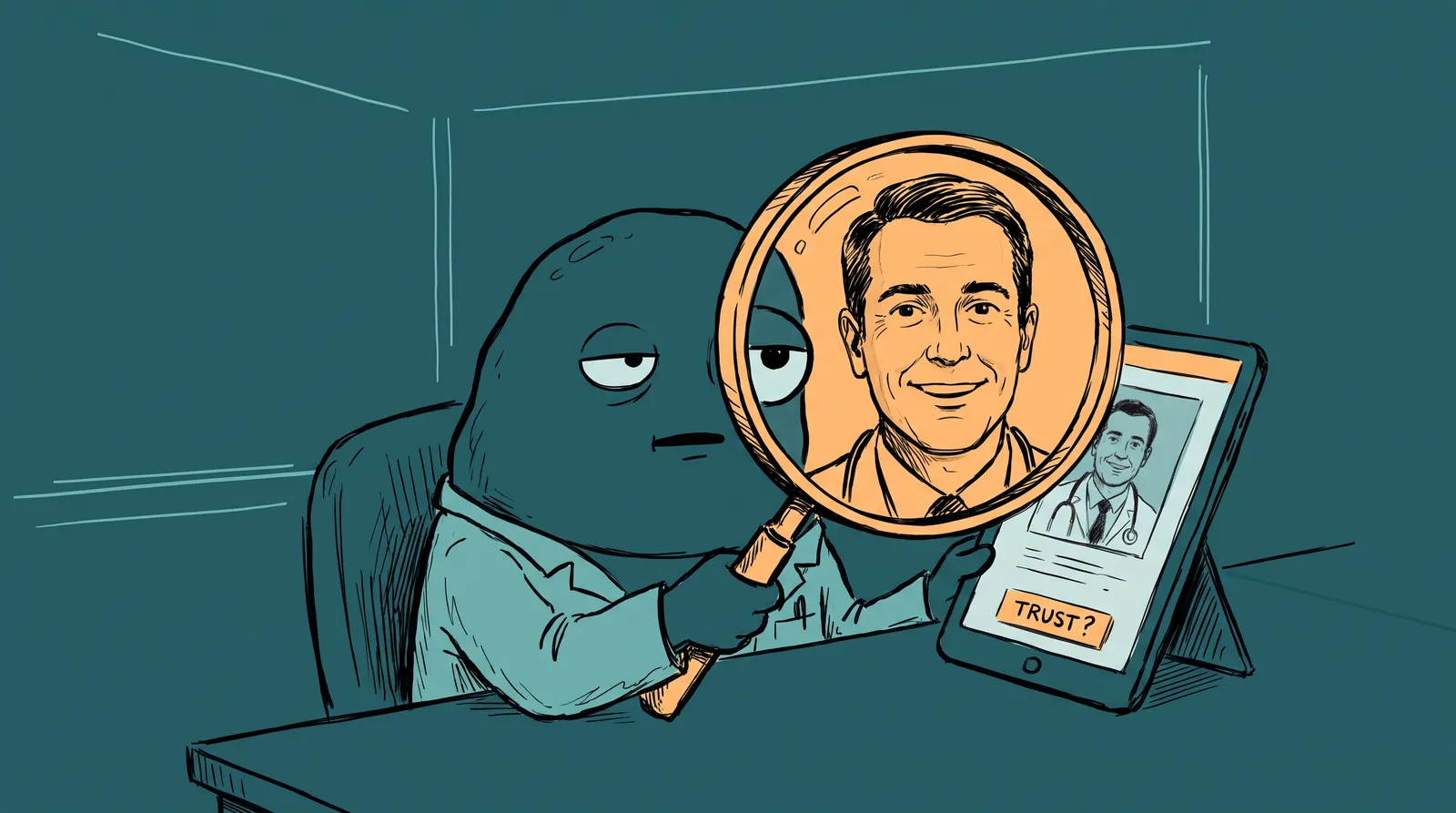
Picture this: a recruiter sitting at her desk on a Tuesday morning, coffee in hand, scrolling through 200+ LinkedIn profiles for a single open role. She spends two, maybe three seconds on each one before deciding whether to click or keep scrolling. And the very first thing she processes isn't the headline, the job title, or the years of experience. It's the photo.
"I wish I could say I read every headline first," she told us. "But the photo hits me before anything else. It's instant."
She's not alone. Research consistently shows that profiles with professional photos receive up to 14 times more views and 36 times more messages from recruiters. And according to Salesso's 2025 analysis, having a professional photo makes your profile up to 7 times more likely to appear in recruiter search results.
So what exactly are recruiters seeing, and judging, in those few seconds?
To find out, we interviewed 14 hiring managers and recruiters across tech, finance, healthcare and creative industries. Their answers were specific and often uncomfortable. What follows is what they said, unfiltered.
The 3-second snap judgment: Why your photo matters more than you think
Every recruiter we spoke with confirmed the same thing: the LinkedIn photo is processed before job titles, headlines, or experience. It's the first data point in a split-second evaluation.
Recruiter #1, a tech-sector hiring manager with 12 years of experience, put it bluntly: "I'm not proud of it, but if someone has no photo at all, I assume they're hiding something or not serious about their search."
This isn't just anecdotal bias. Research from Princeton University by Willis and Todorov demonstrates that humans form reliable trait judgments, including trustworthiness, competence, and likability, within 100 milliseconds of seeing a face. That's one-tenth of a second. Longer viewing time increases confidence in the judgment but rarely changes the initial impression. The psychology behind first impressions from profile photos runs deep, and understanding it can give you a real edge.
And visual information sticks. Studies indicate people recall roughly 65% of visual content after three days, compared to only 10% of text-based information. Your face becomes the memory anchor for your entire profile.
Worth being clear about: recruiters aren't necessarily judging attractiveness. They're reading professionalism, effort and self-awareness, and whether you understand the unwritten rules of professional presentation.
The specific details they notice fell into clear categories.
The red flags: 6 things recruiters say they immediately notice (and judge)
1. Background clutter and distracting environments
Recruiter #3 didn't mince words: "I once saw a candidate for a VP role with a pile of laundry visible behind them. It tells me something about attention to detail."
In a survey of over 1,000 recruiters, 49% specifically flagged vacation photos as a major red flag because they suggest the candidate is mentally "somewhere else." The background of your photo sets a stage, and recruiters are paying attention to what's on it.

2. Outdated photos
Multiple recruiters flagged the awkwardness of meeting someone who looks 10 to 15 years older than their LinkedIn photo. Recruiter #5 called it a trust issue: "It immediately starts the relationship on a moment of dishonesty."
Experts recommend updating your professional photo every two to three years, or immediately after a significant change in appearance. In the 2026 job market, where 83% of candidates rank compensation transparency as a baseline expectation, employers have raised their own expectations for candidate transparency in return. An outdated photo is increasingly viewed as a micro-breach of trust right at the start of the relationship.
3. Overly casual or social-media-style shots
Sunglasses. Drinks in hand. A cropped group photo where someone else's arm is still draped over your shoulder. Recruiter #7's rule is simple: "If you wouldn't wear it to an interview, don't wear it in your headshot."
And 75% of recruiters flagged photos where the face isn't clearly visible as unprofessional.
4. Low resolution, pixelated, or poorly lit images
Recruiters associate blurry, grainy images with low tech literacy, especially for digital and tech roles. A full 67% of recruiters flagged low-resolution photos as unprofessional. Recruiter #9 calls it "the equivalent of showing up to an interview with a wrinkled shirt."
5. Inconsistent personal branding
When the photo doesn't match the seniority or industry of the role, it creates cognitive dissonance. A hoodie selfie for a C-suite finance position. An overly stiff corporate shot for a creative agency role. Recruiters notice when the visual identity doesn't align with the professional identity.
6. No photo at all
This was the most universal red flag. Eleven of 14 recruiters said a missing photo makes them less likely to engage. Several noted it triggers spam or fake-profile suspicion. In a world of digital-first hiring, no photo essentially means no handshake.
The subtle signals: What your photo unconsciously communicates
Beyond the obvious red flags, recruiters described reading subtler cues that shaped their impressions.
On warmth, Recruiter #10, who hires for cross-functional teams, was candid: "I'm hiring for teams. I'm unconsciously asking: would this person be good to work with?" A warm, genuine smile with visible teeth can increase perceived likability by up to 135% in a professional context compared to a stiff or closed-mouth expression.
On eye contact, a direct gaze at the camera is the closest thing to a visual handshake. In a scrolling feed, a direct gaze catches attention and signals confidence. Looking away can read as evasive or disengaged. As Jose Lara Photography notes, LinkedIn serves as a digital introduction, and the gaze is how you "meet" someone through the screen.
On color and wardrobe, several recruiters mentioned noticing whether clothing colors and styles felt intentional and industry-appropriate. The 2026 standard remains "dress one level up," meaning wear what you'd wear to an important client meeting, not a casual Friday. A tailored blazer remains the most versatile, high-competence item across most industries.
On lighting, natural or studio light reads as someone who invested in themselves. Harsh overhead fluorescents read as an afterthought.
Recruiter #12, who hires for healthcare roles, summed it up: "A polished photo doesn't guarantee competence, but it signals that the candidate understands how professional presentation works. In patient-facing roles, that matters."
Case study: The before-and-after that changed a recruiter's mind
Recruiter #6 shared a story that stuck with us. She nearly passed on a strong candidate because of a blurry, dimly lit bathroom-mirror selfie. The resume was solid. The experience was relevant. But the photo created enough hesitation that she moved on to other profiles.
Weeks later, the same candidate appeared in her search results again, this time with a professional headshot. Clean background. Good lighting. Confident expression.
"It was like meeting a different person," she said. "Same resume, completely different impression."

The data backs this up. Complete profiles with high-quality photos are a primary driver of higher InMail response rates. Personalized InMails sent from credible, polished profiles see average reply rates of 18 to 25%, while top-performing campaigns from highly polished profiles can reach 35 to 40%, according to SendIQ's 2025 report.
This gap between actual qualifications and perceived qualifications is real. Your photo can be the bridge or the barrier.
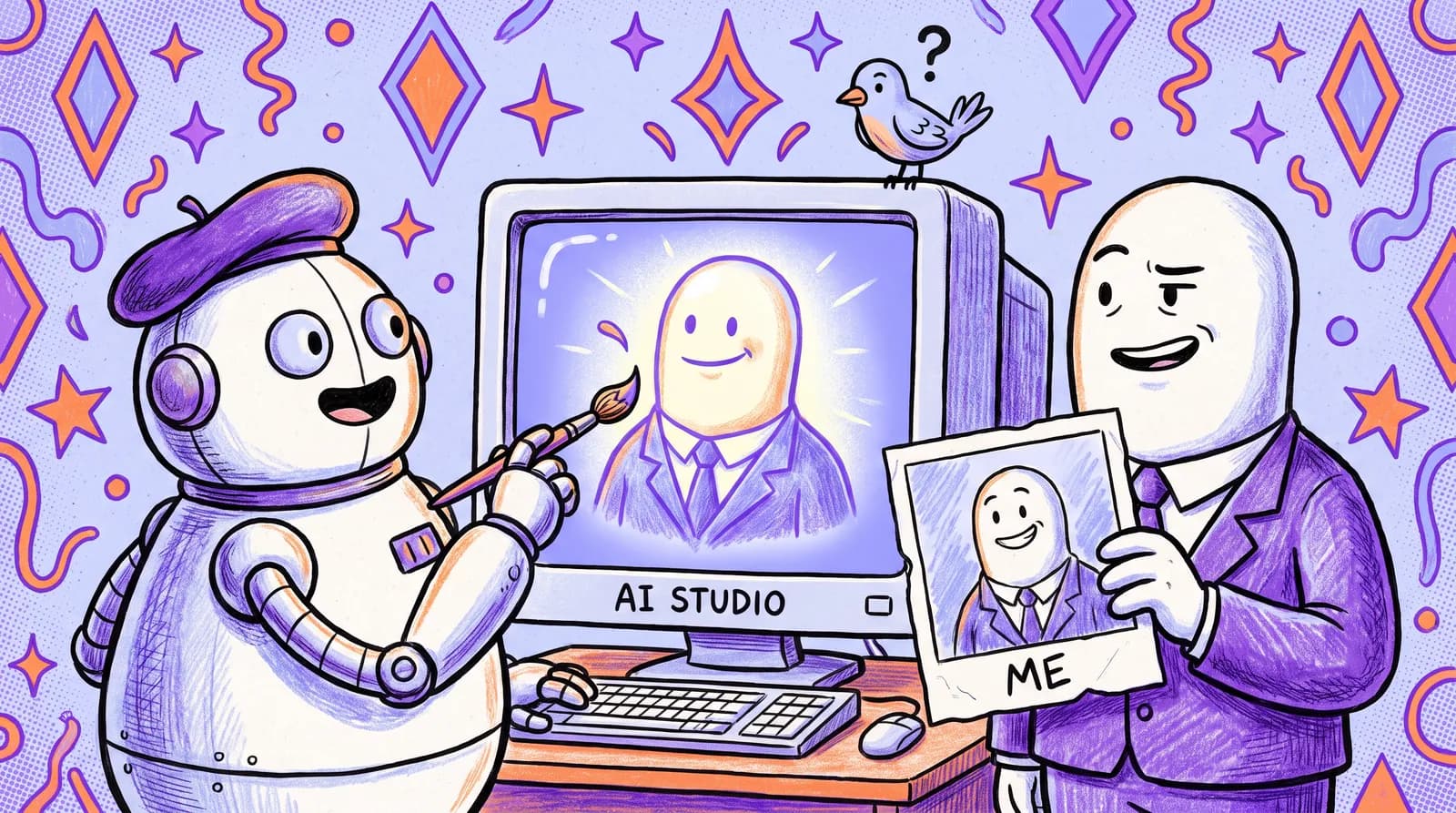
And increasingly, AI tools are making it possible to close that gap without spending hundreds of dollars on a studio session.
The AI headshot question: How recruiters feel about AI-generated photos in 2026
AI headshot tools went mainstream across 2025 and 2026, so the obvious question is whether recruiters notice and whether it matters.
Opinions are split, and the trend favors acceptance.
Eight of our 14 recruiters said they either can't tell the difference or don't care, as long as the photo looks professional and authentic. Recruiter #2 was direct: "I'd rather see a polished AI headshot than a grainy selfie any day."
The research reveals a fascinating paradox. According to a 2026 Wonderstory/Ringover study, 76.5% of recruiters preferred AI-generated headshots over real photos in blind tests, citing better lighting, polish, and professionalism. Yet 66% of those same recruiters said they'd react negatively if they realized the photo was AI-generated. And despite 80% of recruiters believing they can spot an AI photo, they're actually correct only 39.5% of the time. Worse than a coin flip.
Three recruiters expressed mild concern about AI photos that look "too perfect" or create an uncanny valley effect, but all three agreed the technology has improved dramatically over the past year.
The most nuanced take came from Recruiter #14: "The issue was never real vs. AI. The issue is: does the photo represent who I'm going to meet? If an AI headshot looks like you on a good day with great lighting, that's fine. If it looks like a different person, that's a problem."
LinkedIn itself allows AI-generated photos provided they accurately reflect your likeness. The risk isn't the technology. It's identity drift, where the photo looks too idealized and fails to match the person who appears on the first video call.
Modern AI headshot generators like Starkie AI focus specifically on this authenticity concern, enhancing lighting, background, and polish while preserving the real person. The goal isn't to create a fantasy version of you. It's to show you at your best.
Where recruiters actually look: Eye-tracking studies and the LinkedIn scan pattern
In 2012, TheLadders conducted an eye-tracking study using EyeWorks software to map exactly where recruiters looked when reviewing resumes and online profiles. The headline finding: recruiters spent an average of about 6 to 7.4 seconds on an initial review. Of that time, roughly 19% was spent on the profile photo alone, approximately 1.4 seconds.
That makes the photo the single most fixated-upon element on the entire profile.

The study also revealed something the researchers found concerning: the profile photo acted as a significant distraction, pulling recruiter attention away from skills and experience. The photo didn't just receive attention. It disrupted the analytical process. This means a strong photo smooths the path to the rest of your profile, while a weak one derails it before the recruiter reaches your headline.
This pattern aligns with what UX researchers call the "F-pattern." On a standard LinkedIn desktop profile, the eye starts at the top left (the photo), moves horizontally across the headline, then drops back to the left and scans downward through experience. Your photo is the anchor point, the first thing processed before your name, title, or any accomplishment.
This is where the "halo effect" kicks in. When a recruiter encounters a professional, polished photo, it creates a subtle cognitive bias that colors how they read everything that follows. The headline seems sharper. The experience seems more credible. Conversely, a low-quality photo primes skepticism. The recruiter starts looking for reasons to confirm their initial negative impression.
One detail often overlooked: most initial encounters with your photo happen at thumbnail size. In LinkedIn search results, message threads, and "People You May Know" suggestions, your face appears at roughly 100 by 100 pixels. A photo that looks fine at full size can become an unreadable smudge at that scale. Your headshot needs to work at postage-stamp size, not just on a high-resolution monitor.
Implicit bias: The uncomfortable truth about photo-based judgments
This section is harder to write, but it would be dishonest to skip it.
Research consistently shows that profile photos introduce bias related to race, gender, age, weight, and perceived attractiveness. Modern callback studies have confirmed that candidates with identical resumes receive significantly different response rates based purely on the demographics suggested by their photos. A 2023 study from Harvard and USC researchers published in Marketing Science found that a candidate who "looks the part" may receive more weight from recruiters than qualifications, reviews, or certifications would otherwise warrant. This "looks the part" bias puts candidates who don't fit industry stereotypes at a measurable disadvantage.
This creates a painful double bind. Candidates can't change who they are. And they shouldn't have to. But they can control the controllable variables: lighting, expression, attire, background quality, and image resolution. The goal is to ensure that bias isn't compounded by a poor-quality photo that also signals low effort.
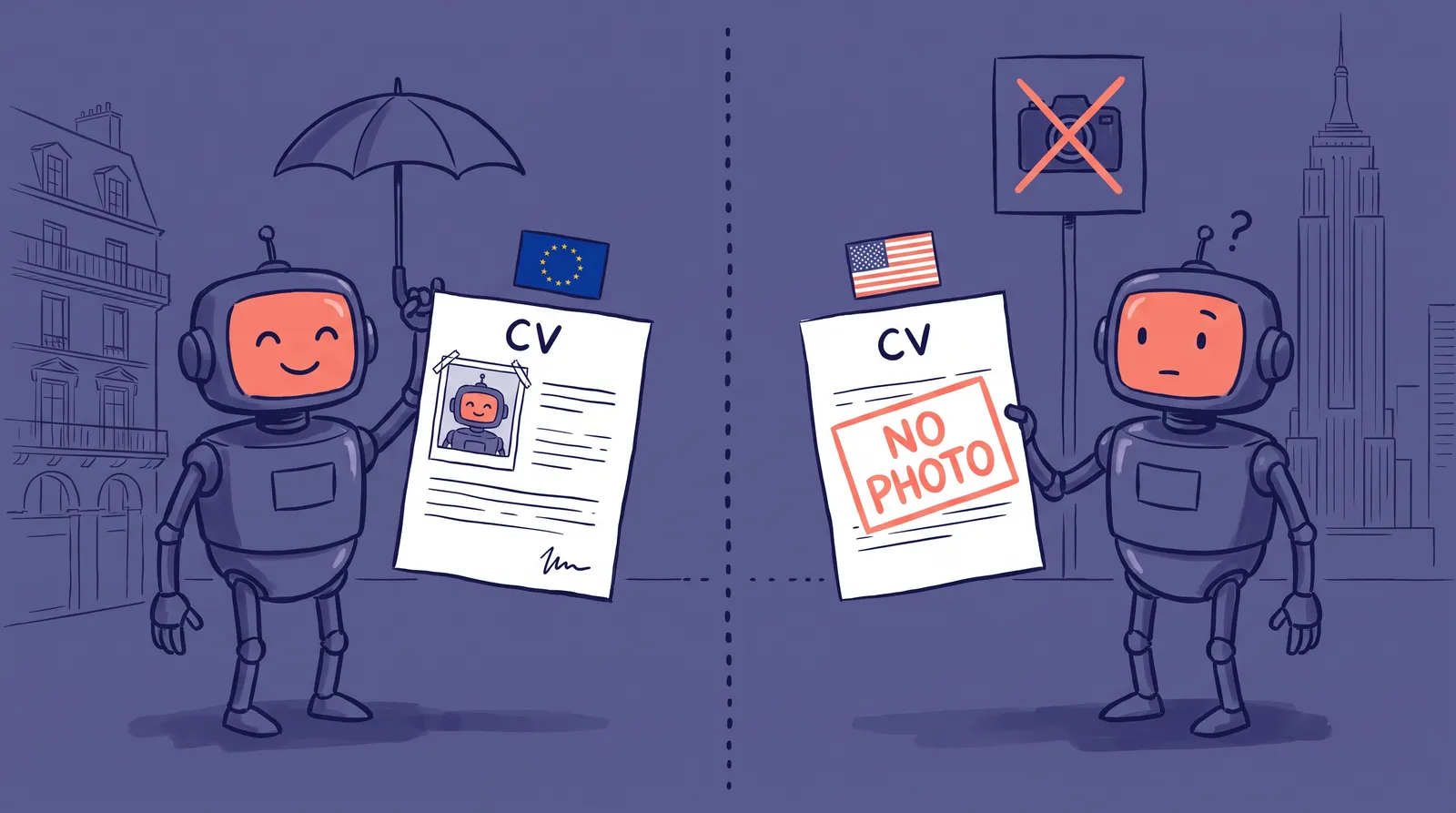
There's a growing movement toward blind hiring and photo-optional applications, and that's a positive trend. But the reality is that LinkedIn and most professional networking platforms still center the photo. It sits right there at the top left, the anchor point of the F-pattern.
The honest framing is this: the goal isn't to pretend bias doesn't exist. It's to make sure your photo puts your best, most authentic self forward so that controllable factors don't add unnecessary friction to a process that's already imperfect.
Industry matters: why a perfect tech headshot would tank in finance
"Professional headshot" is not one thing. What signals competence and cultural fit shifts a lot by industry, and a mismatch is its own red flag.
Finance, law and consulting signal trust through formality. Think a dark structured suit or blazer, a neutral or dark background, a slight micro-smile, and a strong, direct gaze. Authority comes first here, warmth second. A casual t-shirt against a sunny park backdrop reads as someone who doesn't understand the culture of risk and precision.
Tech, startups and creative fields flip the priorities. Smart-casual attire, a collared shirt or a dark tee under a blazer, brighter or contextual backgrounds, and a fuller genuine smile. Here, warmth and adaptability signal competence. A stiff corporate suit against a black studio backdrop can read as rigid or out of step with an agile team.
In healthcare and education, warmth rules. Patients and students need to feel safe, so an approachable smile, open body language, and softer tones matter more than pure authority.
There's one more context that quietly punishes almost everyone: the thumbnail. LinkedIn shows your photo at tiny sizes in search results and InMail previews. At that scale, busy backgrounds vanish into mush, low contrast disappears, and a small facial crop becomes unreadable. What looks fine at full size can be invisible in a recruiter's feed.

The actionable playbook: How to get your LinkedIn photo right (according to recruiters)
Between the 14 interviews and the research, a strong 2026 LinkedIn photo looks like this.
The background is clean and deliberate: a neutral solid like white, light gray or soft blue, or a simple office setting. A dark background such as navy or charcoal helps your profile pop against LinkedIn's white interface.
The likeness is current, within one to two years. If people who know you wouldn't recognize it, it's overdue.
The attire is one level up from your typical workday and appropriate to your industry, with a tailored blazer working almost everywhere.
The lighting is natural or studio, never harsh overhead fluorescents. The expression is a genuine smile with a direct gaze.
The resolution is at least 1200x1200 pixels, well above LinkedIn's 400x400 minimum, so it stays sharp on 4K and Retina displays. And your face fills 60 to 70% of the circular crop, which is what keeps you recognizable at thumbnail size on a phone.

On budget: traditional professional headshots cost $150 to $500 or more for two to five final images. That's a real barrier for many job seekers, particularly early-career professionals, people between roles, or anyone managing tight finances.
AI headshot tools offer a compelling alternative. The average cost runs $20 to 50 for 40 to 100 usable variations. One reviewer found 15 genuinely usable LinkedIn headshots from a $29 AI package, resulting in a cost of roughly $1.93 per photo.
Starkie AI lets you generate studio-quality headshots from selfies, with multiple background and style options to match different industries, all at a fraction of traditional photography costs. Check out the available headshot packs to find the right style for your industry.
And here's a practical tip from Recruiter #11 that works regardless of how you get your photo: "Show your photo to three people who know you. Ask: does this look like me on a good day? If they say yes, you're golden."
What recruiters wish candidates knew: Final thoughts from the interview panel
We closed each interview by asking: if you could tell job seekers one thing about their LinkedIn photo, what would it be?
Recruiter #4: "Your photo isn't about vanity. It's about showing you understand professional norms and you've put thought into your personal brand."
Recruiter #8: "I've never not hired someone because of a bad photo. But I've definitely clicked on profiles because of a good one. In a competitive market, that click is everything."
Recruiter #13: "The best photos look effortless but intentional. That's the sweet spot."
The common theme across all 14 interviews was clear. Recruiters aren't looking for perfection. They're looking for professionalism, authenticity, and self-awareness. A photo that says: I take my career seriously, and I understand how to present myself.
Here's a sobering stat to close on: 71% of recruiters have admitted to rejecting an otherwise qualified candidate based solely on an unprofessional LinkedIn photo. In a 2026 job market where remote work and digital-first hiring are standard, your LinkedIn photo may be the closest thing to a first handshake you get.
Make those 3 seconds count
Back to the recruiter scrolling 200-odd profiles on a Tuesday morning. In three seconds she isn't reaching a final judgment, but she is forming an impression that colors everything after it.
Unlike years of experience or an Ivy League degree, your LinkedIn photo is one of the easiest professional assets to upgrade. Book a photographer or use a generator like Starkie AI; either way it pays back in visibility.
Try Starkie AI if you want the headshot handled in minutes.