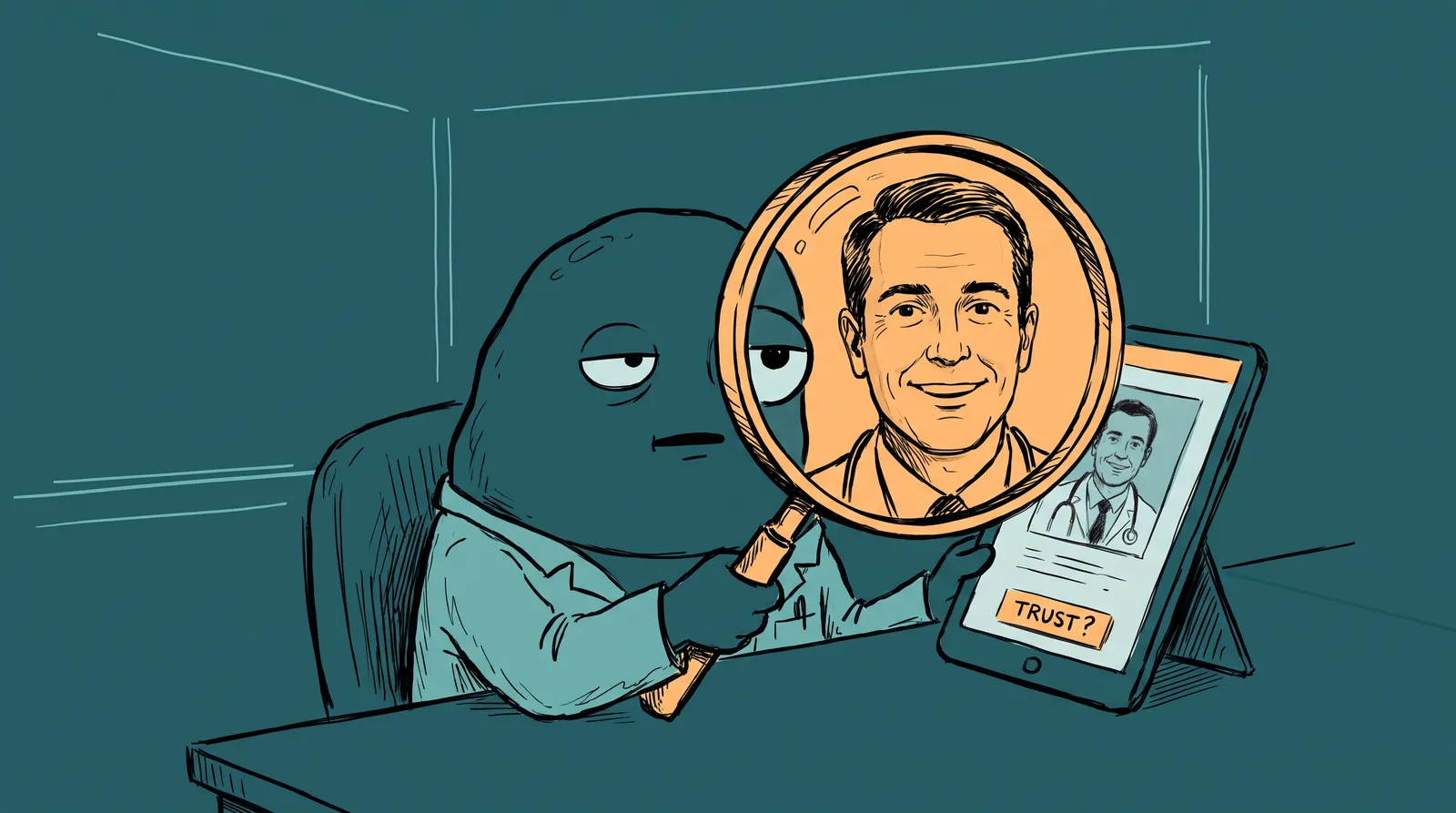
Your face is being judged right now. Not by someone sitting across from you, but by a stranger scrolling through LinkedIn, spending less time on your photo than it takes to blink. Research confirms that humans form trait judgments from a face in as little as 100 milliseconds, well before they read your headline, scan your experience, or notice your credentials.
So if your LinkedIn photo is the first thing a recruiter, client, or collaborator sees, what is your face actually telling them?
The mechanism is what psychologists call thin-slicing: the brain making rapid, confident social judgments from very little information. Decades of research in social psychology and neuroscience have mapped the specific visual signals that trigger perceptions of trust, competence and likability, and those signals can be engineered into a photo deliberately.
Your brain on faces: The psychology of first impressions
Your brain doesn't wait for evidence before making up its mind about someone. It runs a rapid threat-and-opportunity assessment the moment it encounters a new face. Nalini Ambady's pioneering work on thin-slicing showed that humans extract surprisingly accurate social judgments from exposures lasting just seconds. But for static images like a LinkedIn photo, the process is even faster.
Alexander Todorov, now a Professor of Psychology at the University of Chicago, has spent years demonstrating that faces are evaluated along two axes: trustworthiness, meaning safe or threatening, and dominance or competence, meaning high or low status. As Todorov himself puts it, "Impressions of social attributes formed from faces are instinctive evaluations, shaped more by perception than by deliberate reasoning." The brain first asks, "Friend or foe?" Then it asks, "Can this person act on their intentions?"
The halo effect is what makes this matter for a LinkedIn profile. One positive signal, a warm genuine smile, leads the viewer to assume a cluster of other positive traits: intelligence, reliability, warmth, competence. This is why photo quality has an outsized downstream effect on everything from connection requests to InMail response rates to recruiter outreach. Your photo isn't a cosmetic detail. It's a conversion lever.
The question becomes: what specific visual inputs trigger the "trustworthy" and "competent" outputs?
The eyes have it: Gaze direction, eye contact, and what they signal
Of all the elements in a headshot, your eyes do the heaviest lifting.
Direct eye contact, looking straight into the camera lens, activates what psychologists call the Social Engagement System. According to Polyvagal Theory, sensing safety through eye contact allows the SES to put the brakes on defensive, fight-or-flight responses, fostering a feeling of genuineness and openness. The psychological literature on the "eye-contact effect" shows that perceived eye contact increases activation in the brain's social network, particularly the fusiform gyrus (involved in face encoding) and regions linked to self-referential processing. In plain language: when someone sees your photo looking directly at them, their brain treats it like a real social interaction.
But direct gaze isn't always the best choice. A subtle 5 to 10 degree off-axis gaze, where you're looking just past the lens, can read as thoughtful or approachable rather than intense. Research published in the NIH's PMC database confirms that a smiling face paired with a slightly averted gaze can actually be judged as more attractive than a direct-gaze smile in certain contexts. This approach works especially well for creative, consulting, or coaching roles where warmth matters more than authority.
Then there's the "dead eyes" problem. Photos where your mouth is smiling but your eyes aren't crinkling create a cognitive mismatch. The brain reads the expression as inauthentic. That's the absence of a Duchenne smile, where the orbicularis oculi muscles around the eyes contract along with the mouth. Without that crinkle, viewers sense something is off, even if they can't articulate why.

One detail that's easy to overlook is catchlights, the small reflections of light visible in the eyes. They make eyes appear alive, alert, and engaged. Flat, shadow-covered eyes register as flat affect, a subconscious negative signal. Professional lighting creates these naturally. AI enhancement tools can add or optimize them. Either way, they matter more than most people realize.
The smile equation: Intensity, authenticity, and the Goldilocks zone
Not all smiles are created equal. And the right smile for your headshot depends on what you want your face to communicate.
Smile intensity runs on a spectrum. No smile reads as serious and composed, potentially cold. A closed-mouth subtle smile reads as approachable but reserved. An open-mouth Duchenne smile reads as warm and genuinely likable. And a very wide grin can tip into try-hard territory depending on the industry.
PhotoFeeler's analysis of over 60,000 photo ratings found that smiling with visible teeth produces a +1.35 increase in likability, the single largest positive shift of any variable they tested. The nuance is that research compiled by Essiz et al. (2025) found broad smiles increase perceived warmth while slightly decreasing perceived competence relative to subtle smiles.
That creates a sweet spot that shifts by industry. A subtle closed smile works well for law, finance, and C-suite roles where composure and authority are the primary signals. An open, genuine Duchenne smile works better for sales, HR, marketing, coaching, and most client-facing positions. This is a strategic choice, not a universal rule.
Studies on Duchenne smiles consistently show they're rated as significantly more genuine, trustworthy, and socially competent than polite or social smiles. In research where participants rated profile photos for hiring likelihood, candidates with authentic Duchenne smiles were judged as more competent and more hireable. The smile isn't just signaling warmth. It's signaling social intelligence.
One practical tip: beware the "frozen smile." Overly posed or held smiles create visible muscle tension that reads as stress or inauthenticity. The best smiles are captured in the moment of natural relaxation after a genuine laugh. It's a technique skilled photographers use deliberately, and it's a pattern that AI tools now try to replicate.
Background, color, and framing: The silent context signals
Your face is doing the heavy lifting. But the background and framing around it are quietly shaping how that face is perceived.
Background color has a measurable effect on trust ratings. According to HeadshotPhoto.io's analysis from February 2026, navy blue backgrounds consistently test highest for perceived professionalism and trustworthiness, aligning with decades of color psychology research linking blue to reliability and credibility. Light grey is the most versatile option: it works across all skin tones, creates clean contrast, and looks polished on every digital platform. Outdoor shots with softly blurred greenery read as approachable and human. Busy, cluttered backgrounds? They tank perceived competence by splitting attention and introducing visual chaos.

Framing matters just as much. The head-and-shoulders frame, where your face occupies roughly 60% to 70% of the image, remains the LinkedIn sweet spot. It's close enough to read your facial expressions (which carry the trust signals) and far enough to show clothing and posture context. Full-body shots lose the face. Extreme close-ups feel invasive.
Clothing functions as its own trust signal. Collared shirts, even without a jacket, dramatically increase perceived competence scores compared to a bare t-shirt neckline. Navy, white, and mid-grey test best for professional credibility. Busy patterns draw the eye away from the face, which is where you want attention to land. Business casual, something like a fitted blazer over a simple top, remains the dominant dress code signal across most industries in 2026.
Some professionals benefit from what photographers call the "environmental portrait," a contextual background like a softly blurred office, bookshelf, or stage that adds a credibility layer. The key: the background must be blurred enough that it supports the face rather than competing with it.
The 100ms audit: What a stranger sees in your current photo
Consider two hypothetical LinkedIn profiles.
The first is a casual selfie shot from a slightly downward angle, no smile, a cluttered kitchen visible behind, a plain t-shirt, flat lighting and no catchlights in the eyes.
The second is a professional headshot at eye level, with a genuine Duchenne smile and visible eye crinkle, a soft navy background, a collared shirt, clear catchlights and a gaze directed straight at the camera.
Mapped against the signals above, the first triggers a cascade of subtle negatives: the downward angle reduces perceived status, the absent smile reads as cold or disengaged, the cluttered background splits attention and introduces disorder cues, and the flat eyes lack social engagement signals. The second stacks positive signal on positive signal: eye-level framing conveys equality, the Duchenne smile signals warmth and competence, the navy background reinforces trustworthiness, and direct gaze activates the viewer's social engagement system.

No single element makes or breaks a photo. But every negative signal chips away at the overall trust score. A genuine smile can partially compensate for a mediocre background, but a perfect background can't rescue a flat, unengaging expression. The effects compound.
To audit your own photo, cover your name and bio, show the image to someone who doesn't know you for two seconds, and ask them to rate it 1 to 5 on trustworthy, competent and approachable. The results are often revealing and cut through the bias of seeing your own face every day.
The stakes are real. In 2026, recruiter tools frequently surface a candidate's profile photo before showing their headline, title, or experience. And research on political candidates has shown that perceived facial competence from a one-second photo exposure predicts election outcomes at above-chance rates. The same snap-judgment mechanism runs every time a recruiter scrolls past your profile.
How AI headshot tools are engineered around these signals
The AI headshot landscape has shifted significantly. Early tools in 2023 and 2024 focused primarily on making photos look professionally lit and photorealistic. The current generation, as of 2025 and 2026, is being trained with an understanding of psychological trust signals, moving beyond aesthetics toward specific social perception outcomes.
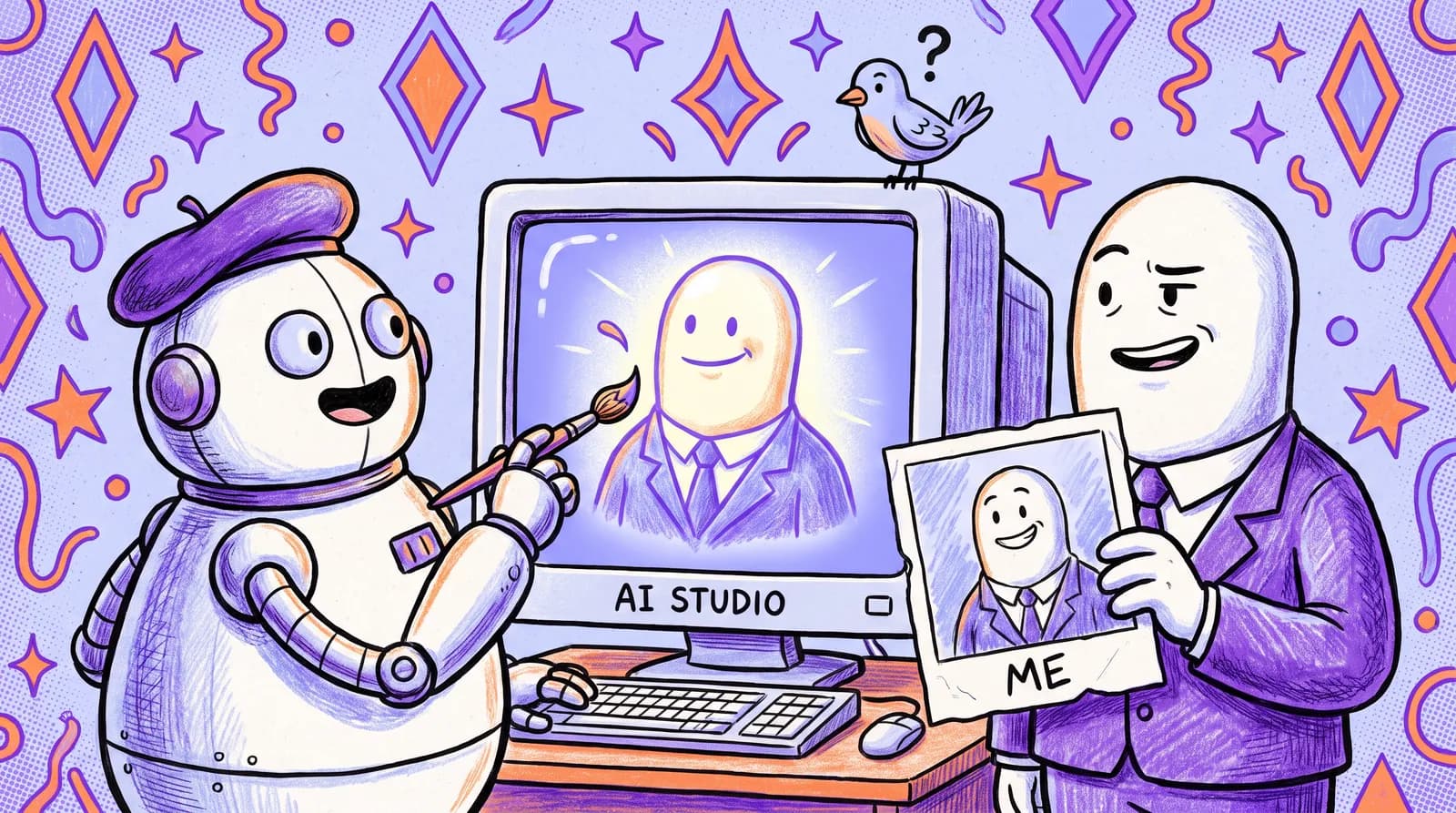
Today's AI headshot tools can correct gaze direction to near-direct eye contact. They can enhance or add catchlights in the eyes. They can calibrate smile intensity for a target industry. They can generate or select backgrounds that test highest for the user's stated professional goals. They can adjust apparent clothing and framing. According to Business Insider's January 2026 analysis, AI-generated headshots are no longer a gimmick but a mainstream option for remote professionals, startups, and distributed teams, costing $25 to $40 compared to $300 or more for traditional photoshoots.
This represents a genuine democratization of professional presentation. Previously, a photographer who understood these psychological nuances was a significant, and expensive, advantage. AI tools like Starkie now encode this expertise into the generation process, meaning a freelancer or early-career professional can produce a photo that scores as high on trust signals as a Fortune 500 executive's $800 studio session.
One nuance matters here. AI tools work best when the input has good raw material. A genuine expression, reasonable lighting, and direct gaze give the AI something real to work with. The technology amplifies and optimizes. It doesn't manufacture authenticity from a blank stare. If you're submitting a selfie for AI enhancement, try capturing it right after a real laugh, with your eyes directed at the lens and in natural light. That gives any tool, AI or otherwise, the best foundation.
There's a live debate about this in 2026. A study cited by Capturely found recruiters correctly identified AI headshots only 39.5% of the time in blind tests, while 66% said they'd be put off if they realized a photo was AI-generated. Which argues for using these tools to produce something naturally professional rather than synthetically perfect.
Your face, your strategy
Your face is judged in 100 milliseconds, and that judgment decides whether opportunities move toward you or past you. Trustworthiness in a photo isn't accidental, genetic, or reserved for people who happen to be photogenic. It comes out of specific, well-researched signals: gaze direction, smile authenticity, background, framing and clothing, all of which you can control.
The gap between a photo that converts and one that costs you is smaller than most people assume. Look at the lens. Let the smile reach your eyes. Pick a clean, blue-toned background. Frame head and shoulders. Wear a collar.
If you want to apply all of that without booking a studio session, Starkie's AI headshot generator is built around these same trust and competence signals.