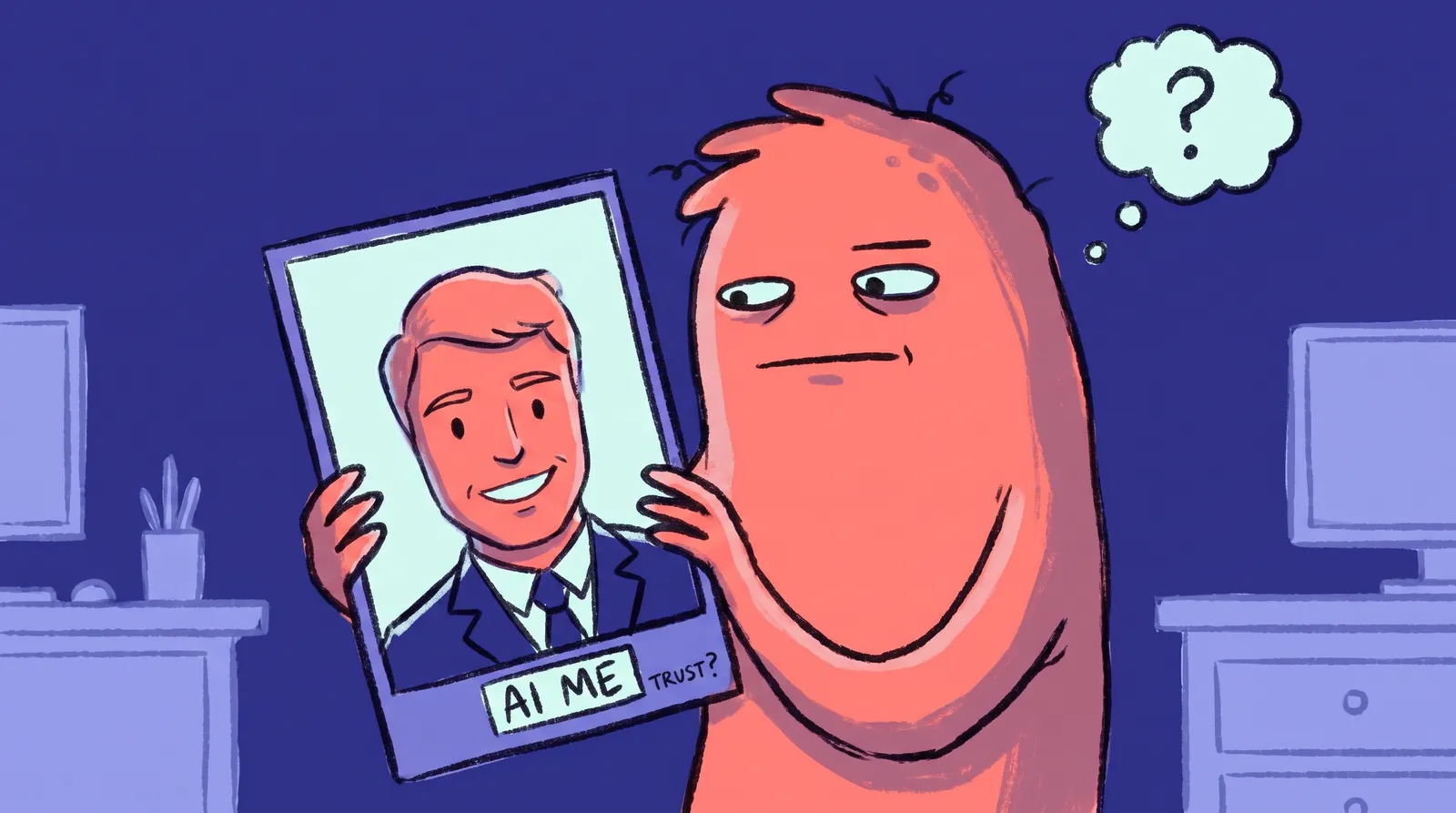
A senior recruiter at a Fortune 500 company scrolls through 200 LinkedIn profiles in a single afternoon. She has done this thousands of times. Then she stops on one. The lighting is perfect. The background is crisp. The subject looks confident, polished, ready. Something feels off. She can't explain why. She moves on, slightly unsettled.
That small moment of hesitation captures a real tension in professional life right now. AI-generated and AI-enhanced headshots are everywhere, yet our cultural instincts still treat a professional photo as a quiet promise: this is who I am.
The numbers show how common this has become. In one study of 1,087 U.S. recruiters, 66% said they felt put off when they discovered a candidate's headshot was AI-generated without disclosure. That reaction is real. The same research found that recruiters correctly spotted AI headshots only 39.5% of the time, which is worse than a coin flip.
So which is the actual problem? The AI headshots themselves, or the way we use them? The authenticity crisis isn't about the technology. It's about a spectrum of use that runs from responsible enhancement all the way to outright fabrication.
How we got here: the AI headshot explosion
Rewind a few years and AI photos were a party trick. Around 2022 and 2023, tools like Lensa AI turned selfies into stylized art. Fun, but not something you'd put on a resume.
By 2024 and 2025, dedicated headshot tools matured fast. Early AI faces looked plastic and unconvincing. That problem was largely solved. At the same time, remote work reshaped hiring. Profile photos replaced the in-person handshake as a first impression. Now in 2026, AI headshots have shifted from novelty to a default presentation standard.
The scale is hard to ignore. The global AI portrait market generated $420 million in 2025, up from $180 million in 2022, and is projected to reach $640 million by 2028. Professional adoption jumped from 8% in 2021 to 58% in 2025. Over 40 million professionals used AI-generated headshots on LinkedIn in 2025 alone, a 300% year-over-year increase.
A Harris Poll survey found that 44% of U.S. adults consider or use AI to generate professional headshots, with Millennials leading at 55%. And 43% of Americans report they don't currently have a professional studio headshot at all.
That gap matters because photos are not optional anymore. LinkedIn data shows profiles with a professional photo get 21x more views and up to 36x more messages than profiles with no photo.

Now consider cost. A traditional studio session runs $150 to $800. An AI headshot session averages $25 to $35. That price difference is the whole democratization argument in a nutshell. A polished professional photo used to be locked behind a paywall that shut out early-career workers, career-changers, and people in lower-wage roles. AI leveled that field. In fact, 71% of users cite cost savings as their main reason for choosing AI.
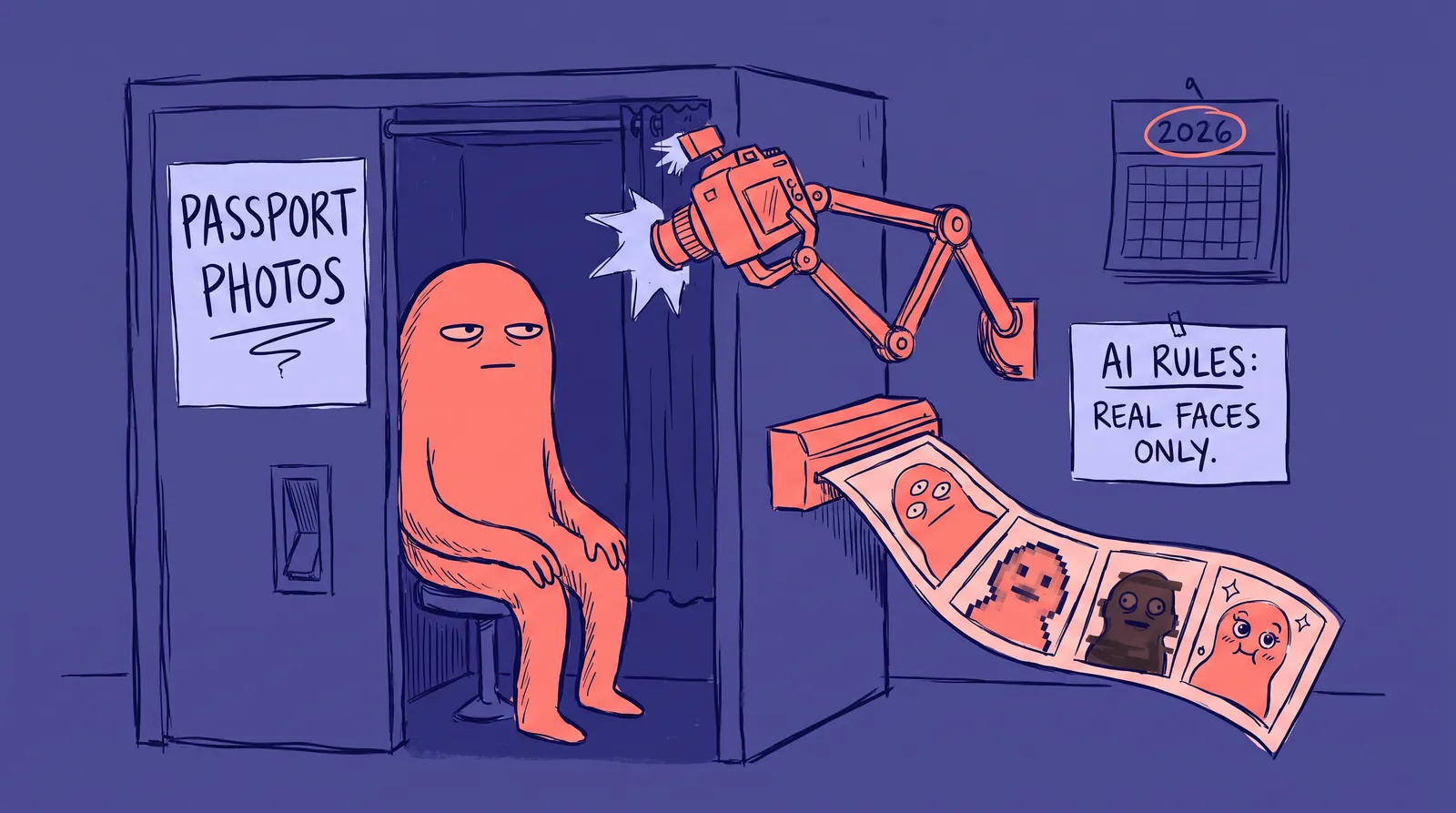
Platforms are still catching up. LinkedIn says profile photos must reflect your actual likeness and runs detection models aimed at fully synthetic fake accounts. But enforcement is uneven, and corporate HR systems are only beginning to write rules for this.
What recruiters actually think (the data might surprise you)
The lazy narrative says recruiters hate AI headshots. The data tells a messier story.
In the Ringover study of over 1,000 recruiters, 76.5% preferred AI-generated headshots over real photos when they didn't know the origin. Only 23.5% preferred actual studio photos. When the source was hidden, AI won by a wide margin.
Detection is where it gets interesting. As reported by Staffing Industry Analysts, 80% of recruiters confidently believed they could spot AI photos. In practice they managed it only 39.5% of the time. For premium AI headshots, that rate dropped to 29.2%.
So most recruiters suspect AI headshots regularly. Very few actually reject candidates over polish alone. The real trigger is deception, not quality. When the same research revealed which photos were AI, trust dropped, and 88% of recruiters said candidates should disclose when an image is AI-generated.
There's also a double standard worth noting. In that survey, 84% of recruiters admitted they'd consider using an AI headshot for themselves.
The uncanny valley problem
Distrust usually comes from mismatch, not from AI itself. A hyper-perfect image that doesn't match the person on a video call creates friction. Your brain expected one face and got another. That gap, expectation versus reality, is what erodes confidence.
What actually turns recruiters off? Overly stylized poses (40.9%), poor lighting (39.9%), too-casual attire (35.6%), and "plastic" over-edited skin (32.7%). These are quality complaints, not "you used AI" complaints.
The generational and industry split
Younger hiring managers and tech-sector recruiters are far more relaxed about AI headshots. Law, finance, and healthcare lean stricter. This is a cultural norm still in transition, not a settled rule.
The recruiter problem isn't "AI headshot = bad." It's "AI headshot that misrepresents the person = breach of trust." That distinction sets up everything that follows.
Enhancement vs. fabrication: where the ethical line actually falls
Picture a spectrum. On one end sits subtle enhancement: fixing harsh lighting, removing a temporary blemish, cleaning up a messy background, adjusting wardrobe contrast. Your facial geometry, age, and skin tone stay 100% true to life. This is functionally identical to what photographers have always done in post.
On the other end sits fabrication: reshaping a jawline, erasing 10 to 15 years of aging, lightening skin tone, narrowing a face, changing eye shape. That produces an idealized avatar, not a photo of you.
Retouching is old news. It goes back to 19th-century darkroom masking and airbrushing. The question was never "should photos be edited?" It has always been "how much is too much?" AI headshots sit on that same continuum.
So where's the line? A practical test: would the person in the photo be recognizable when they walk into an interview or join a video call? If yes, you're in enhancement territory. If the interviewer double-takes, you've crossed into misrepresentation.
There's a bias dimension here too, and it's serious. A JAMA Network Open study evaluating 1,000 AI-generated physician images found White physician images generated 82% of the time, while Latino physicians got 0% representation across three of five platforms tested. In another documented case, an MIT graduate asked for a "professional headshot" and received an output with lightened skin and blue eyes. A Bloomberg analysis of Stable Diffusion across 17 occupations found the darkest skin tones concentrated in low-status roles.
This is why source material matters so much. Responsible AI headshots should be trained on your own photos, producing a polished version of your actual self, not a generic template stitched from biased training data.
Two professionals, two approaches, two outcomes
Let's make this concrete.
The responsible user, in one profile, is a mid-career marketing director who uploads 15 to 20 varied photos of herself and picks a neutral corporate background and conservative retouching. The output keeps her real facial structure, skin tone, and visible age. It just swaps dim home lighting for clean studio light and adds a professional blazer. Her profile views climb sharply. In interviews, over Zoom and in person, nobody blinks. No visual mismatch, so rapport builds without friction.
The deceptive user, in the other, is a job seeker who uploads three low-res casual snapshots into a free tool with aggressive generative settings. The AI removes a decade of aging, reshapes his jawline, and alters his hairline. He gets callbacks thanks to the polish. Then he joins the video call. Interviewers hesitate. The person on screen doesn't match the photo. That mismatch triggers the 66% aversion penalty, and trust erodes before he says a word.
The technology was identical. The ethical outcome came down entirely to intent and inputs. AI headshots are a tool, not a moral category.

These two stories also expose the challenge for platforms and employers. How do you write policy for something that lives on a spectrum?
Where platforms and employers are drawing the line in 2026
LinkedIn has staked out a clear principle even if enforcement lags. Its community policies require that profile photos reflect your actual likeness. AI enhancements are permitted. Fully synthetic or significantly altered versions are not. Repeat violations can lead to upload restrictions.
To fight synthetic identity fraud, LinkedIn added free identity verification through partners like Persona and CLEAR. According to ConnectSafely, profiles with a Verified Identity Badge receive 60% more views. Verified authenticity is becoming a competitive advantage.
Enterprises are drawing lines too, and inconsistently. The PR agency Greentarget UK banned AI-generated images across all company assets, citing brand authenticity risks. Some law firms and financial institutions have done the same, partly over SEC and FINRA compliance concerns about misleading representations.
Many Fortune 500 onboarding docs now split the difference:
Permitted: AI background removal, studio lighting synthesis, minor retouching. Prohibited: generative face modifications, facial structure changes, or fully synthetic avatars on corporate Slack, Teams, or investor directories.
Then there's the detection arms race. Some HR platforms are piloting AI-image detectors. But given that recruiters spot premium AI only 29.2% of the time, and automated tools carry their own error rates, these systems create a false sense of certainty on both sides.
The absence of clear, consistent standards is probably breeding more distrust than responsible AI use ever would. Companies and platforms need frameworks, not blanket bans.
The ethical case for AI headshots done right
Reframe the question. Not "are AI headshots authentic?" but "can AI help you present your most authentic professional self?" For a lot of people, the honest answer is yes, when the tool builds from their real likeness.
Start with equity. That studio paywall of $150 to $800 shut out entry-level candidates, first-generation graduates, nonprofit workers, and lower-income job seekers. Since photo-less profiles suffer a 21x visibility penalty, that paywall carried a real career cost. AI tools let people compete on presentation for $25 to $35.
PhotoPacks.AI has partnered with the Autism Society of Colorado and, through its work with the International Rescue Committee, provided AI headshots to refugee and neurodivergent job seekers. These initiatives open professional doors for people who faced the steepest barriers.
Now the philosophical piece. A professional photo has always been a curated presentation. You dressed deliberately. You picked your angle. You smiled at the right moment. AI headshots extend that intentionality. Authenticity was never defined by the medium, lens, or algorithm. It's defined by fidelity to who you are.
An image that genuinely reflects you needs no disclaimer. The honesty is in the likeness.
This is where Starkie AI fits the ethical middle ground. It trains on your own uploaded photos and produces a realistic, recognizable, professional version of you. Not a younger stranger. Not a different person. Just you, on your best day. That's what responsible use looks like in practice.
So, are AI headshots hurting or helping professional trust?
Think back to that recruiter. Instead of an uneasy feeling about a "too perfect" photo, she can ask a sharper question: does this image reflect who this person actually is? That was always the right question, long before AI existed.
Used responsibly, AI headshots are a net positive for professional trust. They shrink the presentation gap caused by socioeconomic inequality, let more people make strong first impressions, and don't inherently misrepresent anyone.
The real authenticity crisis isn't the technology. It's the minority of deceptive use cases poisoning perception for the responsible majority. The fix is better norms, clearer platform guidance, and tools designed around ethical defaults.

The challenge, whether you're a job seeker, an HR pro, or a platform designer: push for a standard of recognizable fidelity. Not blanket rejection. Not uncritical acceptance. Just a simple bar: does the face match the person?
The face in the photo, the person in the room
Our recruiter can't always tell if a headshot is AI-generated. Increasingly, that question matters less than she once thought. What matters is whether the face in the photo matches the person who joins the call.
Authenticity in professional photos never meant "unedited." It has always meant "genuinely representative." AI doesn't change that standard. It just gives more people a real shot at meeting it.
Professional norms in 2026 are settling on a reasonable middle: polish is welcome, fabrication is not. Tools that start from your real photos sit comfortably inside that norm. That's exactly the philosophy behind Starkie AI, built for professionals who want to look their best without pretending to be someone else.
So here's the question worth sitting with. The most authentic thing you can do is show up as yourself. What does your current headshot say about who that is?