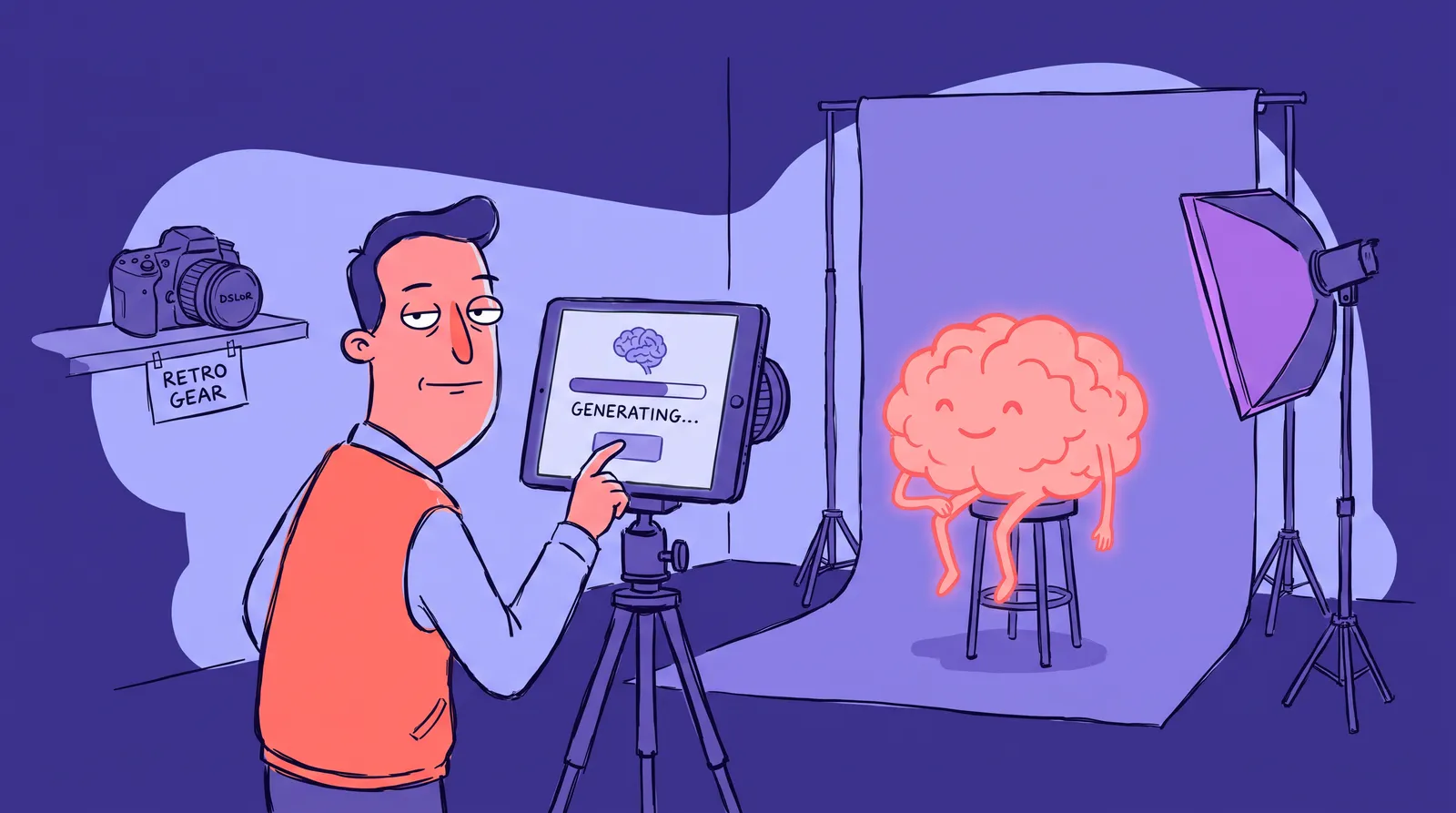
In 2022, Sarah turned away 40 clients a month. Her calendar was booked solid. Corporate teams, LinkedIn refreshes, ambitious founders, all lining up for a spot in her studio. She raised her prices twice that year and still couldn't keep up.
By early 2026, her schedule had gaps she hadn't seen in years. She couldn't explain why.
Here's the twist: she hadn't lost her skill. Her lighting was still gorgeous. Her editing was still sharp. The market had shifted beneath her feet, quietly and fast. AI headshot tools reset what people expected to pay, how fast they expected delivery, and whether they thought they needed a photographer at all.
This isn't a doom story, though. The photographers doing well in 2026 aren't the ones who ignored AI or argued with strangers in comment sections. They got curious and then strategic. What follows is how they did it: the workflows, the repositioning, and the revenue models you can borrow this week.
The landscape shift: what AI Actually did to the portrait market
Start with the numbers. The global AI portrait and headshot market passed $420 million in 2025, up from $180 million in 2022, and top platforms processed over 48 million portrait sessions last year. Professional adoption of AI headshot tools jumped from 8% in 2021 to 58% in 2025.
The impact on working photographers is real. A survey by the Association of Photographers found that 58% of professional photographers lost work to generative AI, with a 65% drop in commissioned images licensed by members.
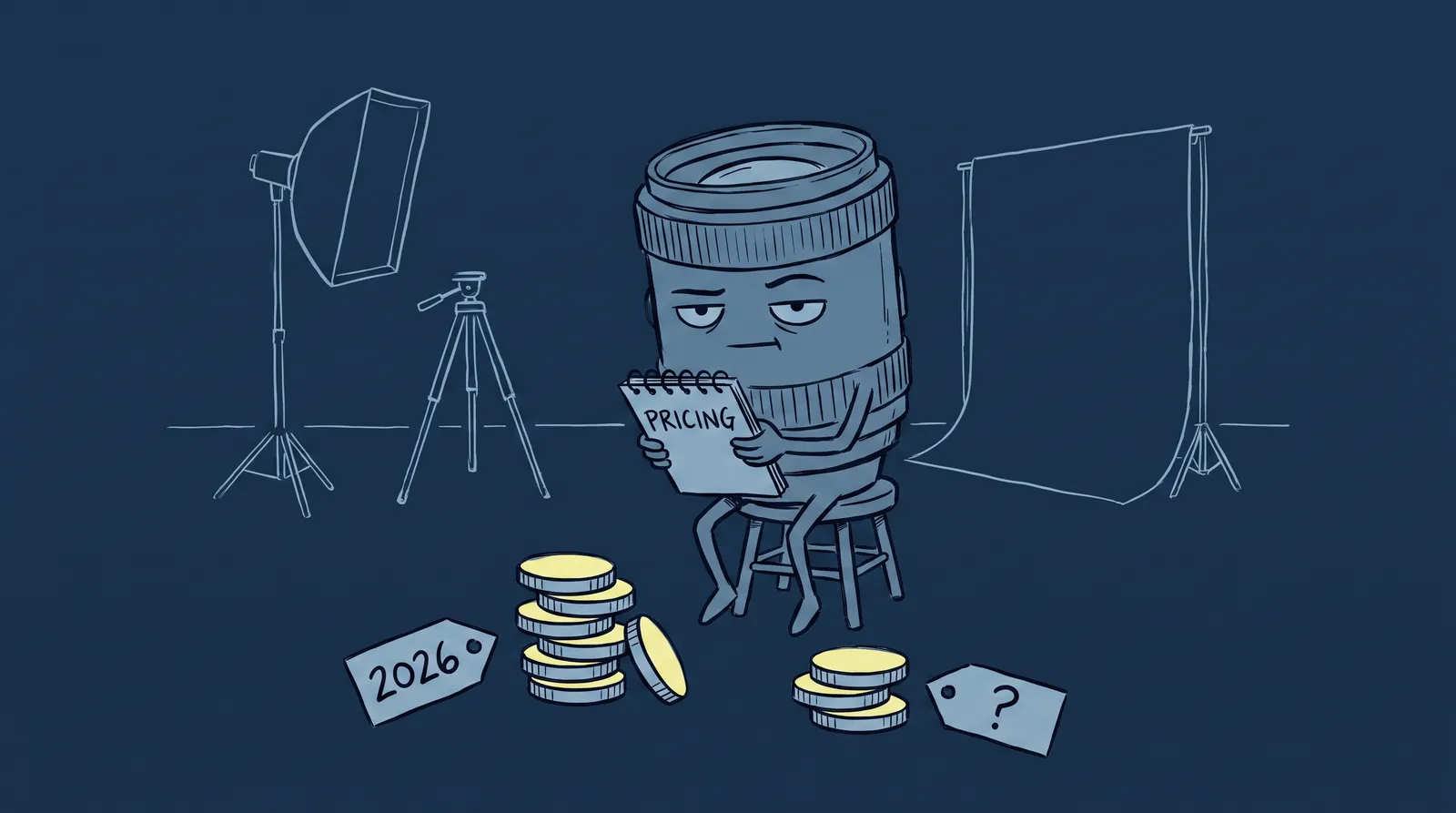
Who defected? Mostly solopreneurs, remote workers, students, budget-conscious job seekers, and corporate HR teams updating big staff directories. The math is brutal for that crowd. An AI headshot package runs $25 to $35, while a traditional studio session costs $150 to $650 or more. Cost was the deciding factor for 71% of AI headshot users.

But here's what AI still can't touch. Face likeness remains the top complaint, cited by 63% of dissatisfied AI headshot customers. AI can't direct a subject, coach a nervous smile, or catch a happy accident in real time. PhotoFeeler research shows the traits that make a headshot work, perceived competence, likability, and influence, depend on posture and micro-expressions that a static prompt cannot manufacture.
A useful way to think about your market now is three tiers. Budget-tier clients are AI-sufficient and always will be. Mid-tier clients have hybrid needs. Premium clients need a human, full stop. Photographers who understand this matrix stop competing where they'll lose and double down where they'll win.
And the silver lining? AI raised awareness. More people than ever are thinking hard about their professional image. The bottom of the market got captured, sure. But the total pie grew.
The photographers who adapted first
The first movers share one trait: they treat AI as a co-pilot, not a rival.
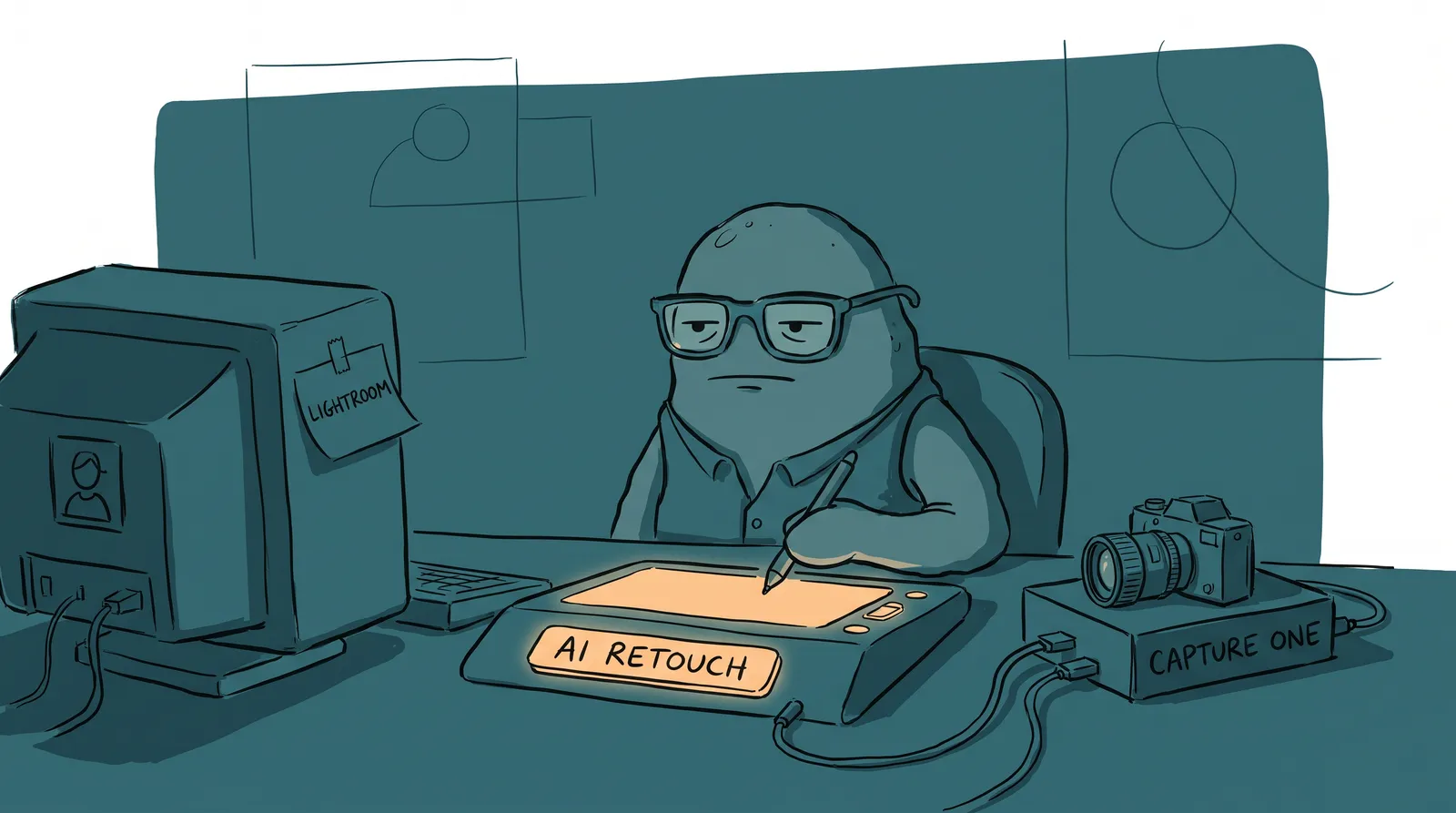
Meet the "hybrid shooter." These photographers built editing pipelines that hand the technical grunt work to AI while keeping full creative control. Tools like Evoto AI automate acne removal, skin tone evening, and background swaps, cutting portrait edits from an hour in Photoshop down to about 15 minutes. Imagen AI learns a photographer's personal editing style and processes whole galleries inside Lightroom, trimming post-production time by up to 90%. AI-powered editing costs $0.05 to $0.08 per image, compared to $5 to $15 for manual retouching.
What does that buy you? Delivery times drop from two or three weeks to 24 or 48 hours. Desk time shrinks, so you can double your monthly session capacity or price competitively while keeping margins healthy.

The "AI as first draft" workflow is sneakily clever. During intake, the photographer asks the client to submit an AI headshot they already bought or tried. It becomes a free brief. It shows the preferred background, outfit vibe, and lighting mood. The photographer then points out the flaws, the identity drift, the plastic skin, the slightly-off eyes, and offers a targeted shoot to recreate the concept for real. Low friction, high conversion.
Smart shooters also use AI mockups during consultations to set expectations, speed up wardrobe calls, and cut reshoot requests. And instead of selling single headshots, many now sell visual identity packages: headshots plus brand photography plus social content. AI handles the commodity layer. Human creativity handles the premium one.
Case study: turning an AI tool into a referral engine
Meet Marcus Vance, a headshot specialist in a mid-sized market, shooting 15 to 20 corporate sessions a month at $350 to $500 each. His problem was familiar: 30% to 40% of his inbound leads dropped off the moment they heard "sessions start at $350."
Instead of discounting or turning them away, Marcus did something counterintuitive. He partnered with an AI headshot platform.
He added a "Budget Options" tab to his site and a line to his intake email. When a lead's budget came in under $100, he sent a personal note: "If a full studio session isn't in your budget right now, I recommend this specific AI tool through my partner link. It's the best $35 option out there."
The economics work. Most AI platforms offer generous affiliate deals. HeadshotPro pays 30% commission per sale with a 60-day cookie window. Studio Pod pays 25% across all tiers with a 90-day window. Marcus started pulling $300 to $600 a month in passive commissions from leads he used to lose entirely.
But the referral income wasn't even the best part. The reverse funnel was.
Budget clients who started with AI eventually hit its walls. They got promoted. They raised seed capital. They needed a specific location, or video, or a cohesive brand shoot. Or they got burned by AI identity drift right before a press release. And when that happened, 15% to 20% came back to book a $500 to $1,500 human session, because Marcus had already earned their trust.
By not being precious about AI, Marcus became the go-to image resource in his network. Word-of-mouth referrals climbed. Premium bookings rose roughly 30%. And his sales cycle shortened because clients arrived already knowing what a human photographer adds. He turned a competitor into a distribution channel.
AI-proof niches: where humans still win completely
Some work is structurally immune to AI. Not "hard to replicate." Impossible.
Events and milestones are the first: weddings, mitzvahs, graduations, family reunions. AI cannot be in the room. It cannot read a father's face during the first dance or adapt to a light shift at golden hour. These packages still command $2,500 to $6,000 or more. As the Photography Business Institute put it, photographers who treat images as a commodity are at risk. Those who capture real, unscripted moments are not.
Bespoke luxury portraiture is the second. High-net-worth clients pay $1,500 to $5,000 and up for an experience, not a file. Live styling, hair and makeup, curated locations, and personal direction. The session itself is the product. And physical deliverables matter: Zenfolio's State of the Photography Industry Report found photographers who hold in-person ordering appointments see up to a 20% revenue lift. Archival prints and custom albums carry value a synthetic JPEG never will.
Corporate team photography at scale is the third. When a company needs consistent, on-brand images across a hundred employees in one day, someone has to be on-site running brand conversations and live quality control. AI can't do that.
Actors, models and creatives are the fourth. Portfolio work demands emotional range and director-level guidance. A static prompt can't coach range.
And niche identity photography is the fifth: maternity, boudoir, LGBTQ+ affirmation portraits, cultural celebration shoots. Deeply personal work where the human relationship is the entire point.
Repositioning your brand in an AI-saturated world
If you're still marketing megapixels, stop. Nobody's booking you for your sensor.
Lead with experience, not output. Swap the technical copy for outcomes. "45MP studio-lit headshots" becomes "Leave your shoot feeling confident, with a portrait that reads as both authority and approachability." Rewrite your About page, your consultation script, your social bios around the transformation, not the pixels.

Use AI as a contrast point, not a threat. The sharpest positioning frames human work directly against AI: "AI can give you a decent synthetic image. We give you the authentic headshot that gets you the meeting." That works especially well now that 90% of hiring managers use AI screening tools, which makes a genuine human presence on LinkedIn more valuable, not less. Pointing to the 63% AI identity-drift complaint rate positions you as the authenticity authority.
Then lean on social proof from the AI-to-human journey. Testimonials from clients who tried AI first and then booked you are pure gold. They articulate the value gap better than any copy you could write.
Finally, publish content that bridges both worlds. Blog posts and videos that honestly explain when to use AI and when to hire a human build authority, pull organic traffic, and make you the expert voice in the room.
New revenue streams photographers are building around AI
The most adaptive photographers aren't just surviving AI. They're building new income on top of it.
Styling and personal branding consultations package your eye for image as a standalone service. Wardrobe reviews, color analysis, brand archetype work, and platform strategy, priced at $150 to $350 per session. No AI model reads your client's industry, audience, and personality in real time and adjusts the recommendation on the spot. You do.
AI result enhancement is another. Clients who buy cheap AI headshots often notice plastic skin, crooked glasses, or misaligned eyes. Offer an "AI Touch-Up Package" for $50 to $150 per image. Fix the symmetry, replace the background, restore natural skin texture, deliver a print-ready file. It's a low-friction entry point that converts single orders into full sessions.
Workshops and education work too. Teach other photographers how to integrate AI, build hybrid pipelines, and reposition. High margin, repeatable, and it cements your thought leadership.
White-label partnerships are newer. Some photographers now work directly with AI platforms to provide human-touch upgrades, on-call retouching, or premium-tier fulfillment.
And subscription retainers give small businesses quarterly visual content packages: refreshed headshots, product shots, social content. Recurring revenue smooths out the lumpy project income that makes photography stressful.
The takeaway
Remember Sarah from the top? By the end of 2026, her calendar was full again. Not because she out-shot the algorithm, but because she rebuilt her business around three things: a premium position AI can't touch, a hybrid workflow that made her faster than ever, and a referral relationship with an AI platform that sends her warm, pre-qualified clients.
That's the whole thesis. The photographers who thrive aren't necessarily the most talented with a camera. They understood that AI changed the market. Human creativity held its value. Those two things can both be true.
Pick one strategy from this and put it into motion this week. Rewrite your services page, add a budget-options referral link, or price an AI touch-up package. One is enough.
If you want to understand the tool your clients are already using, start with Starkie AI. Whether it becomes a referral partner, a workflow asset, or the first stop for clients who'll eventually want the real thing, it's worth knowing well.