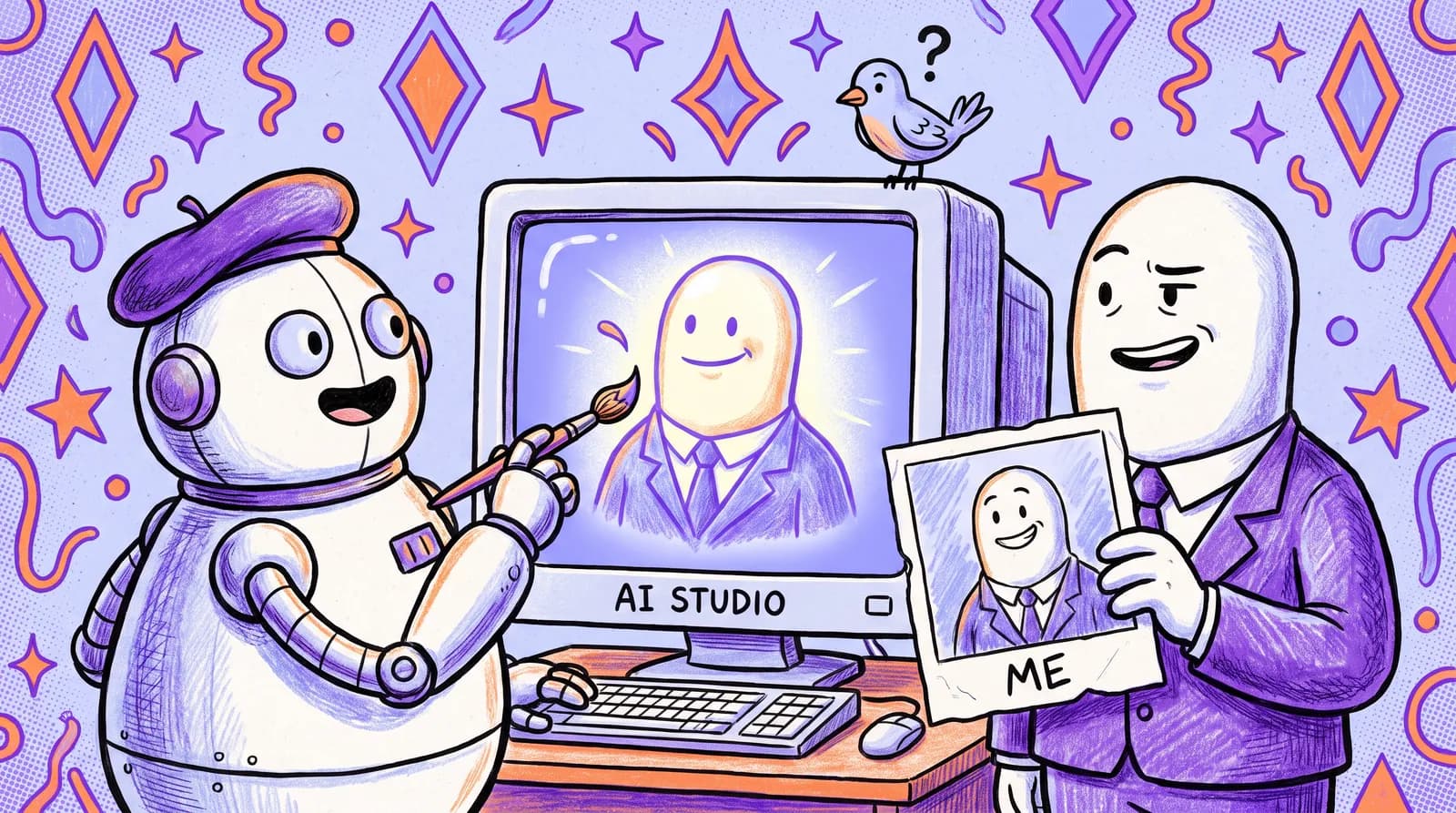
In a 2025 study, 68% of hiring managers shown a mix of real and AI-generated headshots couldn't reliably tell them apart. But here's the twist: they consistently rated the AI-generated photos as "more trustworthy." This paradox sits at the heart of a rapidly evolving debate.
Millions of job seekers now turn to AI headshot generators like Starkie to create polished, professional portraits. Meanwhile, researchers, ethicists, and regulators are asking harder questions. Do AI-generated headshots level the playing field, or do they tilt it in new, invisible ways?
What follows works through the 2025 and 2026 research to separate hype from evidence: what AI headshots mean for hiring fairness, who benefits, who's at risk, and how to use them responsibly.
The detection gap: Can recruiters actually spot AI headshots?
No, and it's getting worse.
A 2024 Ringover survey of 1,087 recruiters found they correctly identified AI-generated headshots only 39.5% of the time. That's statistically worse than flipping a coin. More recent 2026 data paints a similar picture: while 80% of recruiters believe they can spot AI photos, they're actually wrong 52.9% of the time.
The confidence gap here is striking. Recruiters think they have a sharp eye. They don't.
What's driving this collapse in detection? Generation quality has improved dramatically. The visual artifacts that once gave AI away, things like glitchy ears, dead-eyed stares, or weirdly smooth skin, have largely disappeared from premium tools like Aragon AI, HeadshotPro, and Starkie. The heuristics that worked against 2023-era AI simply don't apply to 2026-era diffusion models.
Then there's what researchers have called the "uncanny valley inversion." AI-generated faces are now perceived as slightly more attractive and trustworthy than real photos on average. The models optimize for symmetry, even lighting, and balanced composition. The result? In blind comparisons, 76.5% of recruiters actually preferred AI-generated images over real photos.
But here's where it gets complicated. When recruiters know a photo is AI-generated, 66% say they'd be "put off" by the candidate. As Brian Confer, co-founder at Capturely, noted in March 2026: "The risk is not detection. It is the trust damage when discovery happens in person or on video."

LinkedIn has reported a 40%+ increase in profile photo updates in 2025, with internal analysis suggesting a significant portion are AI-generated or AI-enhanced. The line between "real" and "generated" is already blurring at scale. And 88% of recruiters believe AI headshot use should be disclosed, even though no major platform currently requires it.
If recruiters can't tell the difference, the question shifts from detection to impact. What happens when AI headshots enter the hiring pipeline?
The smoothing problem: How AI portraits handle race, age, and gender
This is where the conversation gets uncomfortable.
Many AI headshot tools are trained on imbalanced datasets where "professional" is overwhelmingly represented by photos of white, middle-aged individuals. The result is a well-documented phenomenon called "feature smoothing": the AI lightens skin tones, narrows noses, reduces visible signs of aging, and pushes outputs toward a narrow Western beauty standard.
One widely cited case involved an MIT graduate of Asian descent who found that when she requested a "professional" version of her headshot, the AI altered her features to appear white, with lighter skin and blue eyes. This wasn't an edge case. As a 2025 Georgetown Law Center on Privacy & Technology report documented, this pattern is systemic.
A 2026 ACM FAccT paper analyzing outputs from 12 popular AI headshot generators found statistically significant reductions in ethnic feature distinctiveness across Black, South Asian, and Indigenous input photos compared to white input photos. Corporate reports from 2026 confirm this evidence is "peer-reviewed, replicated, and damning."
Age markers get the same treatment. A 2025 AARP-commissioned study found that AI headshot tools removed or softened wrinkles and gray hair in 73% of cases for users over 50, even when the user never asked for it. For a workforce already battling age discrimination, this raises serious concerns.

There is a counterpoint worth noting. Some AI tools, including Starkie, are actively working on diverse training datasets and output auditing to preserve authentic features while still delivering professional polish. The spectrum ranges from heavy smoothing to genuine feature preservation, and the gap between the best and worst tools is wide.
The takeaway? Not all AI headshot generators are created equal. The tool you choose matters enormously.
A/B tests in the real world: Do AI headshots actually help job seekers?
Theory is one thing. Data is another.
Large-scale A/B studies from 2025 and 2026 by ResumeBuilder.com and Jobscan tested identical resumes with AI-generated headshots vs. professional studio photos vs. casual selfies vs. no photo at all, across 3,000+ job postings in the US, UK, and Germany. The results were nuanced.
In markets where resume photos are standard, such as Germany and much of Europe, AI headshots performed statistically on par with professional studio shots and significantly outperformed casual photos or no photo. This represents real democratization. A candidate who can't afford a $200 to $500 studio session can now compete visually.
In the US, where resume photos are less standard, adding any headshot (AI or real) had a neutral-to-slightly-positive effect on callback rates for client-facing roles but no measurable effect for technical roles.
Recruiter behavior data reinforces this. According to survey data, 74.4% of recruiters are more inclined to interview candidates who include a headshot. And 66.7% say headshots help them "put a face to a name."
But there's a catch. Visual red flags can backfire. In one 2025 survey, 71% of recruiters admitted to rejecting candidates based on visual red flags alone, and 38% specifically flagged "AI-smoothed" images as untrustworthy. The quality of your AI headshot matters just as much as having one.
Beyond callbacks, there's a psychological dimension. A 2026 CareerBuilder survey found that 61% of job seekers who used AI headshots said having a professional-looking photo increased their confidence during the application process, independent of whether it actually changed outcomes.
As one analyst at Narkis.ai put it in April 2026: "A candidate who can't afford a $300 photographer session and uses a $30 AI headshot isn't gaming the system. They're doing exactly what the system rewards: presenting themselves professionally."
These benefits are real. But they exist within a legal and ethical landscape that's changing fast.
The EU's synthetic media disclosure debate and its ripple effects
The EU AI Act (Regulation EU 2024/1689) entered into force on August 1, 2024, making it the world's first comprehensive legal framework for AI. Its core transparency obligations, including Article 50's requirements for labeling synthetic content, are set to become legally binding on August 2, 2026. A final "Code of Practice" detailing technical standards for marking and watermarking AI-generated content is expected by June 2026.
The key question for job seekers: does a LinkedIn profile photo or resume headshot count as synthetic media requiring disclosure?
As of December 2025, European Commission guidance clarified that AI-generated headshots used in job applications are not currently required to carry disclosure labels. However, employers using AI to screen photos must disclose that use. This asymmetry has drawn criticism from both sides: candidates can use AI freely, but employers face strict transparency rules when they use AI to evaluate those same images.
On the employer side, AI-powered hiring tools that screen photos or video are classified as High-Risk AI systems under Annex III. These systems must meet strict requirements for transparency and human oversight.
The US landscape is more fragmented. The FTC issued 2025 guidance on synthetic media in commercial contexts. Illinois amended its AI Video Interview Act (effective January 2026) to reference AI-generated applicant materials. A patchwork of state-level approaches is emerging.
Perhaps most significantly, the EEOC released a February 2026 technical assistance document warning employers that rejecting candidates based on AI-photo detection tools could constitute disparate impact discrimination, particularly if those tools perform unevenly across demographic groups.
The regulatory signal is clear. Several Fortune 500 companies have already begun adopting "photo-blind" initial screening processes in response. This shift may ultimately make the headshot debate moot for early-stage hiring.
The democratization argument: Who benefits most from AI headshots?
Then there's the money.
The average professional headshot session in the US costs between $150 and $450. In major cities like New York, Los Angeles, or San Francisco, standard sessions run from $450 to $924 or more, typically yielding only 2 to 3 edited images. For an entry-level job seeker, a recent immigrant, or a freelancer in a developing economy, that's a significant barrier.
AI headshot generators, by contrast, cost between $25 and $79 for a basic package and often generate 40 to 100 options.
The stakes of not having a professional photo are real. LinkedIn data consistently shows that simply having a profile picture makes an account 14 times more likely to be viewed and generates 36 times more messages. Skipping a photo isn't a neutral choice. It's perceived as a signal that the account is fake or inactive.

Pew Research found in 2025 that workers without a professional headshot on LinkedIn receive 30% fewer profile views on average. This "headshot gap" mirrors broader economic inequalities.
Data from platforms like Starkie shows that the highest adoption of AI headshots is among first-generation college graduates, recent immigrants, and freelancers in developing economies. These are the populations that stand to gain the most from accessible professional imagery.
But the tension is undeniable. The same tool that helps a first-generation grad look polished can also enable deception or reinforce beauty biases if it's not designed thoughtfully. Democratization only works when the tools themselves are fair.
The bias beneath the pixel: How AI headshots could introduce new problems
AI doesn't operate in a vacuum. It learns from data. And when that data skews toward Western professional norms, the outputs follow.
Research published in late 2024 on PubMed confirmed that standard AI image models like DALL-E 3 and Midjourney overrepresent lighter skin tones when generating demographic imagery. The bias isn't hypothetical. It's measured.
Then there's what researchers call "digital colorism": instances where AI subtly lightens skin tones, smooths textured hair, or narrows facial features. Industry observers have noted that some AI tools create a "rubber or plastic-like effect" on skin, teeth are whitened, and faces are made slightly too symmetrical. This doesn't eliminate bias. It automates and scales it.
There's also the "uncanny homogeneity" problem. If everyone's AI headshot converges on the same polished aesthetic, it could erase cultural markers, personal style, and the visual diversity that DEI efforts are trying to protect. A Sikh man's turban, natural Black hairstyles, or visible disability could be de-emphasized or altered by an algorithm optimizing for a narrow definition of "professional."

Responsible AI headshot platforms are working to address this directly. Starkie AI's approach centers on preserving authentic features, maintaining skin tone accuracy, and respecting cultural presentation while enhancing only production quality: lighting, background, resolution. The critical design line is the distinction between "enhancing the photo" and "altering the person." Platforms that blur that line risk becoming instruments of erasure rather than equity.
Voices from the hiring table: What recruiters and DEI leaders actually think
Here's where the data gets fascinating. And contradictory.
In blind tests, 76.5% of recruiters actually preferred AI-generated headshots when evaluating professionalism and approachability. They couldn't reliably tell the difference, correctly identifying AI headshots only 39.5% of the time (worse than a coin flip). Yet once they learned a photo was AI-generated, 66% said they'd be put off by it.
This is the recruiter paradox: they prefer the results but distrust the method.
Many hiring managers acknowledge they are influenced by photo quality but feel powerless to ignore it. The common refrain from industry surveys sounds something like: "We know it's biased, but a blurry photo still signals something about attention to detail." Career expert Sam DeMase has warned of "corporate catfishing," noting that obviously AI-generated photos trigger immediate trust issues.
What about removing photos entirely? The "photo-blind" approach has genuine evidence behind it. According to data compiled by Gitnux, removing names and photos from resumes increased minority interview invitations by 24%. Ethnic minorities were 50% more likely to be called for interviews when applications were anonymized.
But photo-blind hiring hasn't scaled. LinkedIn's platform design makes photos inescapable. Cultural norms reinforce them. And even if you strip photos from the application, bias reappears at the video call stage. Research has shown that language patterns on resumes can reveal gender identity with 99% accuracy, undermining even the most rigorous anonymization efforts.
DEI consultants increasingly frame AI headshots as a "harm reduction" strategy: not a perfect solution, but a practical one that reduces one vector of bias while broader systemic change is pursued. Think of it like resume-anonymizing tools. Imperfect, but net-positive.
The counter-perspective deserves airtime too. Some DEI advocates argue that normalizing AI headshots treats the symptom (unequal photo quality) rather than the disease (appearance-based judgment), and could distract from deeper structural reforms.
Both sides have a point. So what does this tension look like in practice?
Ethical guidelines: Using AI headshots responsibly as a job seeker
If you're considering an AI headshot, here's how to use one responsibly.
Choose tools that preserve your authentic appearance. Look for generators like Starkie that maintain your actual skin tone, facial structure, age markers, and features rather than "optimizing" you toward a generic standard. Not all tools handle this equally. Do your homework.
Use AI to change your presentation rather than your identity. Changing your outfit, background, or lighting is analogous to choosing what to wear to an interview. Altering your fundamental appearance crosses an ethical line and risks the trust that an interview relies on. If colleagues or interviewers wouldn't immediately recognize you from your headshot, you've gone too far.
Stay current on disclosure norms. Most regions don't currently mandate labeling AI headshots on resumes, some industries (government, law, healthcare) may have emerging internal policies. Know your context.
Audit the output. Compare your AI headshot to a recent selfie. Ask a friend or colleague: would you recognize me from this photo? If not, dial it back. Over-edited images that create "awkward moments" in real-world meetings will hurt you more than they help.
Push for systemic change where you can. The best long-term answer to headshot bias isn't better AI photos. It's hiring processes that evaluate skills over appearance. Support and seek out employers with photo-blind screening. Push for the structural fixes, not just the cosmetic ones.
And consider data security. Choose platforms that are transparent about data usage and guarantee prompt deletion of your source biometric data (facial images) after processing. Your face is sensitive information. Treat it that way.
Looking forward
Back to the opening paradox. AI headshots are now indistinguishable from, and often preferred over, real photos. That tells us something important. Not just about AI, but about the biases already embedded in how we evaluate candidates.
AI-generated headshots are neither inherently ethical nor unethical. They're a tool whose impact depends entirely on how they're built and how they're used. The research is clear: they can meaningfully reduce the cost barrier to professional presentation, especially for those who need it most.
But that promise is only fulfilled when the tools themselves are designed with fairness in mind. That means preserving authentic features, resisting the pull toward homogenized beauty standards, and empowering users to look their best while still looking like themselves.
At Starkie, that's the standard we're building toward. The hiring world is changing. The least we can do is make sure the headshot isn't what holds anyone back.